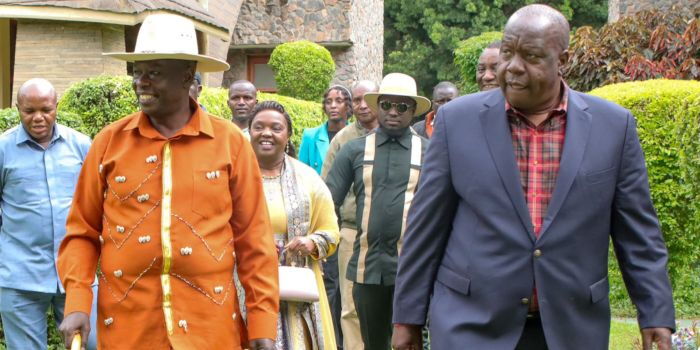
“Raila Left Us in Your Hands”: Kiengei’s Bold Jokes as Ruto Graces JCM Anniversary


The digital space and the pews of Jesus Compassion Ministry (JCM) are currently in a state of high-voltage friction following Bishop Muthee Kiengei’s decision to host President William Ruto on Sunday, February 22, 2026. The event, held at the church’s headquarters in Ruiru, Kiambu County, was meant to celebrate the ministry’s third anniversary. However, the optics of Kiengei rolling out the red carpet for the President has led to accusations from some quarters that the Bishop has “sold his congregants” or shifted his political stance for state favor.
The backlash took a formal and dramatic turn when the church’s U.S. branch leader, Pastor Charles Wachira, announced his immediate resignation. In a stinging public statement, Wachira cited “moral discomfort” and a leadership crisis, arguing that the church should not appear indifferent to the suffering of the people—particularly the youth and Gen Z congregants who have been vocal critics of the current regime. For many followers, the visit felt like a sharp U-turn for Kiengei, who just months ago was filmed at a burial fiercely criticizing the state over the shooting of an unarmed JCM member, Boniface Kariuki.
During the service, Kiengei attempted to navigate the tension with his signature humor, delivering several “playful jabs” directly to the President, who was seated in the front row. He joked that his current “suffering” and political confusion were because the late Raila Odinga had “left the sheep in Ruto’s hands” via the broad-based government agreement. While the President was seen laughing along with the congregation, the humorous exterior did little to calm the storm on social media, where critics resurfaced Kiengei’s past anti-government sermons to highlight what they called “blatant hypocrisy.”
Bishop Kiengei has since defended the invitation, insisting that JCM is a “church for all people” and that hosting the Head of State is an act of compassion and national duty rather than a political endorsement. He challenged his critics to understand that spiritual leadership requires engaging with all leaders to foster national healing. Despite his defense, the “JCM Civil War” continues to trend, serving as a powerful example of the growing “anti-clerical” sentiment in Kenya, where congregants are increasingly demanding that their religious leaders maintain a clear separation between the pulpit and the state.