Opposition Vows to Block Ruto’s “Illegal” Sh5 Trillion Infrastructure Fund

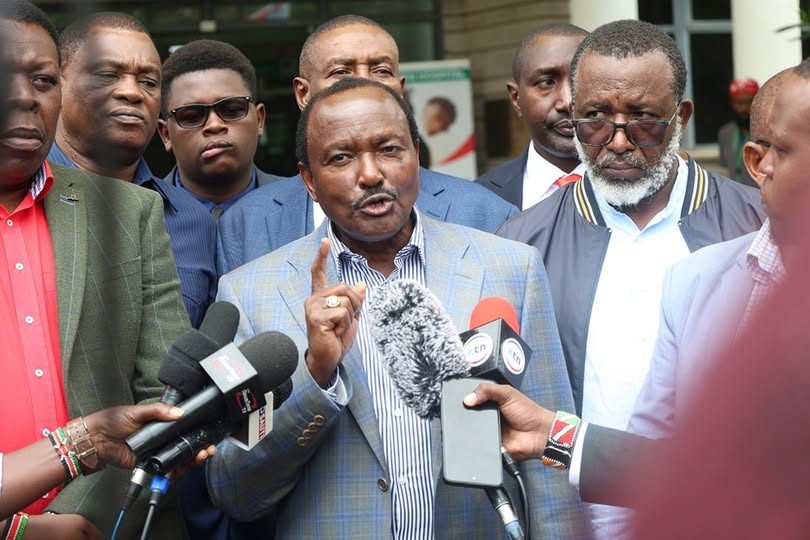
The Kenyan political scene is currently engulfed in a fierce debate over President William Ruto’s National Infrastructure Fund (NIF), a Sh5 trillion development vehicle that the opposition has labeled a “coordinated assault” on the country’s constitutional framework. During a high-stakes media briefing on March 5, 2026, leaders from the United Opposition—including former Deputy President Rigathi Gachagua and Wiper leader Kalonzo Musyoka—claimed the fund is being groomed as a massive campaign war chest to rig the 2027 General Election.
The core of the controversy lies in the government’s decision to establish the NIF as a Limited Liability Company (LLC) rather than a traditional public fund under Article 206 of the Constitution. Treasury Cabinet Secretary John Mbadi has come under heavy fire for what the opposition describes as “misleading the legislature”. While Mbadi initially assured Parliament that the fund would be subject to standard oversight, a recent court affidavit filed at the Milimani High Court revealed a contradictory reality: the NIF is structured as a private corporate vehicle that was not even incorporated when these assurances were given to MPs.
Opposition leaders argue that this corporate structure allows the Executive to bypass the Auditor General and the Controller of Budget. “The President wants money off the budget, off oversight, and off the radar completely,” asserted PPA party leader Maliba Arnold. Rigathi Gachagua was even more blunt, suggesting the fund is a conduit for “voter bribery” on an unprecedented scale, aimed at securing a second term for the Kenya Kwanza administration.
Beyond governance, the fund’s capitalization strategy has sparked fears over the “predatory” sale of strategic national assets. To raise the required Sh5 trillion over the next decade, the government plans to monetize mature public assets, including potential share sales in Safaricom and the Kenya Pipeline Company (KPC). Kalonzo Musyoka likened this move to “a family selling its most productive farm to cover annual household shopping,” warning that reducing state ownership in such critical utilities creates significant national security risks.
The opposition has also drawn parallels between the NIF and the recent KPC IPO, which they described as a “failed object lesson” characterized by overvaluation and a lack of transparency. Critics warn that if the government cannot credibly execute a pipeline IPO, it cannot be trusted with the country’s digital backbone or a Sh5 trillion infrastructure reservoir.
The High Court has already dealt a major blow to the project, issuing conservatory orders to suspend the establishment and operationalization of the fund pending a full hearing. Petitioners, including Dr. Magare Gikenyi, argue that the fund duplicates the roles of the Equalization Fund, potentially diverting resources meant for marginalized areas to politically favored projects. As the 2027 election cycle draws nearer, the NIF has become a symbol of what analysts call a “trust crisis,” where even developmental initiatives are viewed through the lens of permanent campaign survival.