State House Budget to Double as Treasury Proposes Sh8.4 Billion Top-Up Amid National Outcry

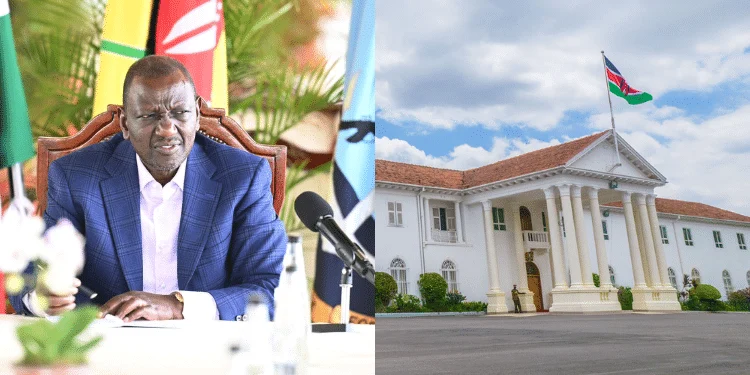
The National Treasury has ignited a fresh political and social firestorm by proposing a massive Sh8.42 billion increase to the State House budget for the 2025/26 financial year. If approved by Parliament, the total allocation for the President’s official residence will nearly double—soaring from the initially approved Sh8.58 billion to almost Sh17 billion. This budgetary surge comes at a time when the country is grappling with severe fiscal constraints and a growing “trust deficit” regarding government spending priorities.
The bulk of the proposed Sh8.42 billion top-up is earmarked for recurrent operational costs that have already seen unprecedented levels of consumption. Domestic travel is set to jump to Sh2.12 billion, reflecting a period of intense regional tours and “ground-level” presidential engagements across the country. Hospitality has been allocated Sh1.61 billion, covering the costs of diplomatic hosting, national events, and high-level meetings. Significant portions of the additional funds are also intended to cover the logistics, fuel, and maintenance of a fast-moving executive branch.
Most controversially, Treasury disclosures reveal that State House had already exhausted 135% of its original annual recurrent allocation by the end of January 2026—spending Sh10.4 billion in just seven months. The government has invoked Article 223 of the Constitution, which allows for spending on “unforeseen” or “urgent” needs before parliamentary approval, to justify this overage. This maneuver has raised questions about the predictability of the national budget and the transparency of executive expenditures.
The timing of the budget increase has drawn fierce backlash from civil society and ordinary Kenyans who are feeling the pinch of economic pressures. While State House expenditure accelerates, other critical sectors are facing “rationalized” cuts or severe funding shortfalls. Public hospitals continue to report equipment failures and a lack of essential medicine, with the transition to the new Social Health Insurance Fund (SHIF) still facing logistical hurdles. Similarly, schools are reporting textbook shortages and infrastructure gaps, leading to a loud outcry from parents and educators alike.
On digital platforms like X and TikTok, the conversation has shifted toward the opportunity cost of these billions. Users have highlighted how the Sh8.42 billion top-up alone could have been utilized to build hundreds of new classrooms or fully equip several Level 4 hospitals in marginalized counties. The hashtag #ClassroomsNotCapitals has gained significant traction as Kenyans demand that the government prioritize basic services over the comfort and mobility of the executive office.
Parliament now faces a decisive vote on the Supplementary Estimates I for the 2025/26 cycle, a broader Sh245.9 billion package intended to cover revenue underperformance and additional expenditure pressures across various ministries. While the government argues that these adjustments are necessary for “administrative efficiency” and to keep the wheels of the state turning, opposition lawmakers have threatened to block the State House increment. They argue that equal attention must be given to the Sh115 billion revenue shortfall recorded by December 2025 before the treasury can justify such a massive hike in hospitality spending.