
Gachagua Unmasks the State House as Ruto Battles ‘Fake News’ Narrative

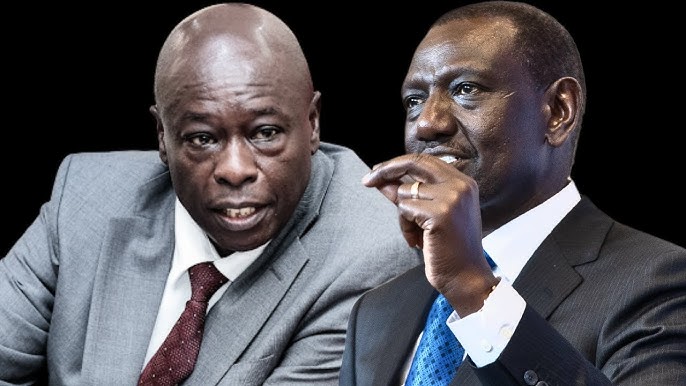
The political ceasefire in Kenya hasn’t just been broken; it has been annihilated. Former Deputy President Rigathi Gachagua has officially moved from the corridors of power to the frontlines of the opposition, unleashing a series of explosive allegations that have sent shockwaves through the nation. In a strategic media blitz, Gachagua has painted a picture of a presidency defined by what he calls “conmanship and deception,” claiming that the very leaders who promised to lift up the “hustlers” are now presiding over a coordinated betrayal of the public trust.
At the heart of Gachagua’s most alarming claim is a massive ‘fake oil’ scandal. The former DP alleges that the Kenyan government is knowingly allowing substandard fuel into the market—fuel that reportedly contains sulfur levels far exceeding safety limits. Gachagua warns that this isn’t just a policy failure but a brewing national crisis. High-sulfur fuel eventually converts into sulfuric acid within an engine, leading to slow knocks and total engine failure within months. By framing this as a “Kasongu” profit-making venture, Gachagua is hitting the administration where it hurts most: the pockets of Everyman Kenyans, from boda boda riders to long-haul truckers.
The drama took an unexpectedly personal turn when Gachagua moved beyond policy to psychological warfare. In a viral revelation, he recounted alleged moments of vulnerability behind closed doors, claiming he witnessed President Ruto ‘crying in Kalenjin’ during periods of extreme political isolation and pressure. This vivid imagery aims to dismantle the President’s “tough-as-nails” persona, suggesting a leader who is increasingly doubting his own grip on the country.
Gachagua also accused Ruto of hypocrisy regarding his treatment of the opposition. He claimed the President has been privately mocking Raila Odinga’s ‘sufuria movement’—the symbolic protests against the high cost of living—while publicly attempting to court the same voting bloc. By exposing these alleged private mocks, Gachagua is attempting to drive a wedge between Ruto and the followers of the “Saba Saba” spirit, portraying the administration as elitist and disconnected from the real suffering of the masses.
President William Ruto, however, has not been a silent spectator to this character assassination. Taking to the podium in the Rift Valley and across national media, the President has launched a fierce counter-offensive against what he labels ‘fake news’ media. Ruto argues that the opposition is sponsoring headlines to distract from the tangible “transformation” he is delivering, including a massive goal to complete 28,000 kilometers of road infrastructure.
The President’s frustration was visible as he called out specific media platforms for spreading misinformation, asserting that “feelings are not facts.” To Ruto, the reality is in the data—the infrastructure being built and the registration of new voters—not in the “dramatic effects” staged by his former deputy. However, with voter registration numbers showing potential apathy in key strongholds, the President is now on a high-stakes drive to re-energize his base before the 2027 race becomes a runaway train.
Gachagua is already looking toward the next election cycle, openly declaring that he will “teach Ruto a lesson in politics” by next year. In a move that signaled a major shift in the political landscape, he listed a new roll-call of allies, including Edwin Sifuna, Babu Owino, and Fred Matiang’i. This “unlikely alliance” suggests that the former DP is ready to cross ethnic and party lines to form a united front against the current administration.
Whether these explosive claims of fuel scandals and secret tears will translate into a political uprising remains to be seen. What is clear, however, is that the gloves are off. As the “Silicon Savannah” navigates this era of hyper-information and political volatility, the line between “fake news” and “hidden truth” has become the new battlefield for Kenya’s future.