
Ruto’s Buffalo Plan Sparks Debate as MP Calls for Lower Feed Taxes to Boost Milk Production

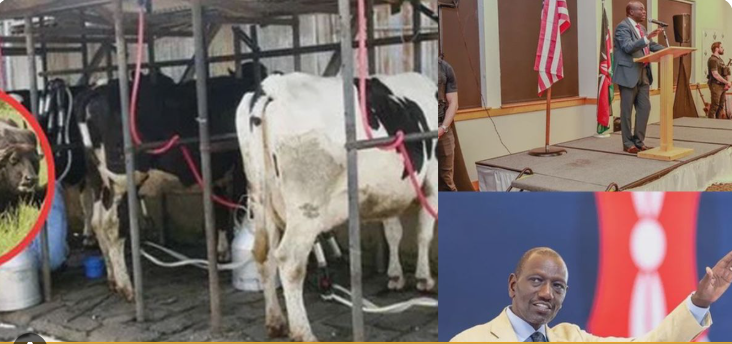
President William Ruto’s plan to work with the Indian government to introduce dairy buffaloes into Kenya has triggered mixed reactions, with some leaders questioning whether importing the animals is the best way to address the country’s milk supply challenges.
The proposal is aimed at increasing milk production by introducing buffaloes known for their ability to produce milk while requiring relatively low-quality feed. However, Manyatta MP Gitonga Mukunji has proposed a different approach, arguing that the government should instead reduce taxes on animal feeds and support Kenyan farmers to improve their existing dairy production.
The debate comes as Kenya continues to search for ways to increase milk availability and strengthen the dairy sector. The country is already one of the leading milk producers in Africa, with annual production estimated at about 5.4 billion litres.
Buffalo farming is common in parts of Asia, particularly India, where farmers have traditionally kept water buffaloes for milk, meat and other products. According to the Food and Agriculture Organization, there are hundreds of millions of water buffaloes globally, with the vast majority found in Asia.
The animals are particularly important to India’s dairy industry, where buffalo milk forms a significant part of overall milk production.
President Ruto recently announced that Kenya was exploring cooperation with India to introduce domesticated buffaloes into the country as part of efforts to address milk shortages.
Speaking about the proposal, the President indicated that Kenya would begin on a small scale to assess whether buffaloes could successfully be integrated into the country’s livestock sector.
The government has not yet disclosed the exact number of buffaloes expected to be brought into Kenya or provided a specific date for their arrival.
Livestock Principal Secretary Jonathan Mweke defended the proposal, saying buffaloes could provide several benefits to Kenyan agriculture.
According to the government, one of the major advantages of buffaloes is their ability to consume relatively low-quality feed and convert it into valuable products such as milk, meat and leather.
“They eat very low quality feed but they translate that very low quality feed into very high quality products,” Mweke said.
The argument is that introducing buffaloes could potentially give farmers another source of milk while also creating opportunities in meat and leather production.
However, the proposal has faced criticism from some opposition politicians and other leaders who argue that importing animals does not address the underlying challenges facing Kenya’s dairy farmers.
Manyatta MP Gitonga Mukunji has called on the government to focus instead on lowering the cost of animal feeds.
Mukunji argued that if the government is serious about improving dairy farming, reducing taxes on animal feeds would allow farmers to maintain healthier and more productive cattle.
He questioned the logic of asking farmers to adopt buffaloes instead of addressing the high cost of inputs that already affects dairy farmers across the country.
The debate therefore reflects two competing approaches to increasing milk production. The government sees buffaloes as a potential additional source of milk and other livestock products, while critics want greater investment in the existing dairy industry.
The cost of animal feed remains an important concern for dairy farmers because feeding represents a significant component of the cost of maintaining productive livestock. Farmers also face challenges related to animal health, breeding, access to markets and fluctuating milk prices.
Supporters of the buffalo proposal, however, argue that introducing a new livestock species could diversify Kenya’s dairy sector and reduce pressure on conventional dairy farming.
The success of such a programme would depend on factors including animal adaptation, farmer training, veterinary services, availability of suitable breeding programmes and the development of markets for buffalo milk and other products.
Kenya’s dairy industry already supports millions of livelihoods, making policies affecting milk production economically significant.
With the country producing an estimated 5.4 billion litres of milk annually, the government’s challenge is not only increasing production but also ensuring that farmers can produce milk profitably and that consumers have reliable access to affordable dairy products.
The proposed partnership with India could therefore open a new chapter for Kenya’s livestock sector if properly implemented. But questions remain about the cost of importing the animals, how farmers would access them and whether buffalo farming would provide a sustainable solution to milk supply challenges.
For critics such as Mukunji, the priority should remain on strengthening the dairy infrastructure Kenya already has by making animal feeds more affordable and helping farmers increase productivity.
The government is yet to announce the detailed implementation plan for the buffalo programme, leaving farmers and industry stakeholders waiting for more information on how the proposed initiative will work.
As the debate continues, the central question remains whether Kenya should diversify its dairy sector by introducing water buffaloes or concentrate on removing the financial and production challenges currently facing local dairy farmers.