
President Ruto Approves High-End Hotels and Hikes Fees in Tsavo

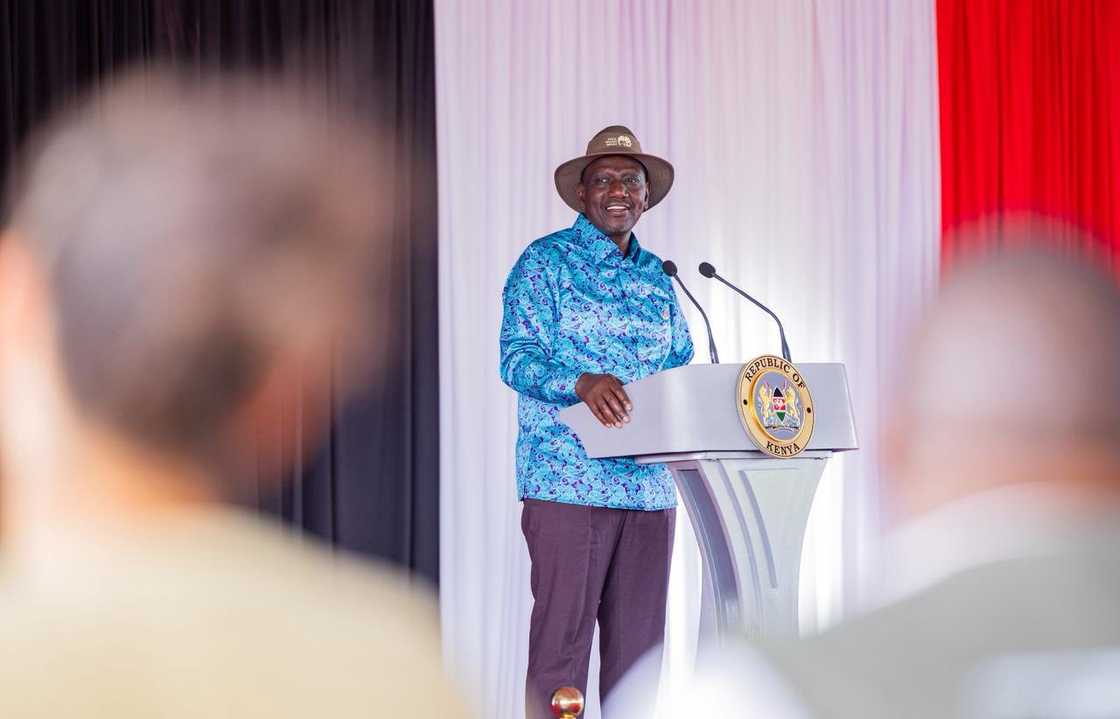
President William Ruto has unveiled an ambitious, high-stakes economic strategy for Tsavo National Park, directing immediate action to significantly increase tourism revenue through luxury infrastructure and steep price hikes.
Speaking during the launch of the Tsavo West Rhino Sanctuary in Ngulia on Tuesday, President Ruto authorized the construction of new high-end premium hotels inside the park. The move is designed to align Tsavo’s offerings with top-tier luxury destinations like the Maasai Mara, making the park a major foreign exchange earner.
To cement this shift to premium tourism, President Ruto issued a directive mandating that tourists staying at the new facilities will be charged a daily rate of between Ksh64,625 (USD500) to Ksh129,250 (USD1,000). This pricing structure will apply to the five new hotels slated for construction within the park.
“We have agreed in my directives to the KWS that there will be no hotels here to pay Ksh2,000 or Ksh3,000. We want to top our revenue so that it can reach the local community,” Ruto stated, emphasizing that the charges are designed to maximize revenue for both the government and surrounding communities.
In a parallel move aimed at creating long-term, diverse income streams, President Ruto directed the Kenya Wildlife Service (KWS) and the Ministry of Tourism to immediately develop a comprehensive carbon credit trading plan for the region.
The plan is set to cover the massive Tsavo East and West National Parks, and notably, the government-owned Galana Kulalu irrigation scheme. By unifying these areas into a single, harmonized carbon zone, the government aims to maximize revenue from what is increasingly being referred to as the “new green gold.” This additional income stream is also intended to directly benefit local communities.
The government insists that the increased revenue from both the higher park fees and carbon trading will be used to bolster conservation efforts. KWS has been tasked with overseeing the new hotel construction, ensuring that international standards, environmental safeguards, and conservation priorities are strictly maintained.
Specific plans include using the revenue to strengthen wildlife protection, develop crucial infrastructure, and construct essential wildlife corridors and dams necessary to support animals during recurring drought cycles.
KWS and the Ministry of Tourism are now expected to swiftly implement the directives, ushering in a new era for Tsavo focused on high-value, low-volume tourism and monetizing its vast natural resources.