Maraga Says Gachagua Was Denied Fair Hearing, Impeachment Should Be Overturned

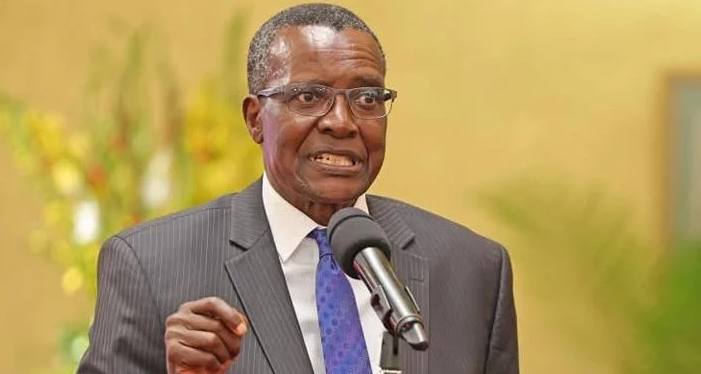
Former Chief Justice David Maraga has sharply criticized the High Court ruling that upheld the impeachment of former Deputy President Rigathi Gachagua, arguing that the judges failed to follow the logical constitutional outcome after finding that Gachagua’s right to a fair hearing had been violated.
Speaking during an interview on Spice FM, Maraga questioned the reasoning behind the landmark judgment, saying the court’s own findings should have led to the nullification of the Senate’s impeachment decision.
The former Chief Justice was reacting to a decision delivered by a three-judge bench of the High Court which upheld Gachagua’s impeachment while simultaneously ruling that the former deputy president’s constitutional right to a fair hearing had been infringed during the Senate proceedings. The court further awarded Gachagua Sh50 million in damages for the violation.
Maraga said the judgment raised fundamental constitutional questions, particularly because the right to a fair hearing is one of the most protected rights under Kenya’s Constitution.
“The court finds that Honorable Gachagua was not given a fair hearing and he has been impeached. In my view, after that finding, the inevitable conclusion should have been to annul that impeachment,” Maraga said.
According to the former Chief Justice, Article 25 of the Constitution treats the right to a fair hearing as a non-derogable right, meaning it cannot be limited under any circumstances. He argued that the constitutional protection was deliberately crafted to ensure that no person is subjected to adverse legal consequences without being accorded a fair opportunity to be heard.
Maraga questioned how the court could acknowledge a violation of such a fundamental right and still allow the resulting decision to remain in force.
He also took issue with arguments that reversing the impeachment would be difficult because other constitutional processes had already taken place, including the appointment of a new Deputy President.
Maraga noted that Gachagua had indicated in his court filings that he was not seeking reinstatement to the office of Deputy President, making it possible for the court to invalidate the impeachment process without necessarily reversing subsequent political developments.
The former Chief Justice further argued that constitutional remedies are intended not only to compensate victims of rights violations but also to deter future breaches of the law by public institutions and state officers.
According to him, the decision to uphold the impeachment while awarding damages sends a dangerous message that constitutional violations can be tolerated as long as compensation is paid afterward.
“If you allow this, that you can trample upon the rights of somebody, give him a few shillings and life continues, then government officers would continue violating the Constitution knowing that they will not be punished individually,” he said.
Maraga warned that such an approach risks entrenching a culture of impunity within public institutions, where officials may feel shielded from personal accountability even when constitutional rights are violated.
He specifically questioned the Sh50 million award granted to Gachagua, noting that the compensation would ultimately be borne by the Senate as an institution and funded through public resources rather than by individual senators who participated in the impeachment proceedings.
In his view, this weakens accountability because the financial consequences of constitutional violations are transferred to taxpayers rather than those directly responsible for the decisions in question.
Maraga’s comments also touched on broader constitutional principles, emphasizing that courts should interpret the Constitution in a manner that advances substantive justice rather than relying on technical or procedural considerations.
He argued that constitutional provisions must be read holistically and in a way that protects the core rights and freedoms guaranteed to all citizens.
The former Chief Justice’s remarks come at a time when the legal battle surrounding Gachagua’s impeachment is entering a new phase. The former deputy president has already filed a notice of appeal seeking to overturn the High Court ruling, while the Senate is also challenging the Sh50 million compensation award.
The Court of Appeal is therefore expected to confront key constitutional questions, including whether a finding that a person’s right to a fair hearing was violated should automatically invalidate an impeachment process and whether monetary compensation alone is an adequate remedy for such violations.
The High Court judgment has sparked intense debate among lawyers, politicians and constitutional scholars, with some agreeing with Maraga that the finding on fair hearing should have led to the impeachment being overturned. Others have defended the court’s approach, arguing that it sought to balance constitutional violations with the practical realities of governance and the events that unfolded after Gachagua’s removal from office.
As the matter heads to the Court of Appeal, Maraga’s intervention is likely to add weight to the growing debate over constitutional accountability, due process and the standards that should govern the removal of senior state officers from office.
The appellate court’s eventual decision could have far-reaching implications not only for Gachagua’s case but also for future impeachment proceedings and the interpretation of fundamental rights under Kenya’s Constitution.