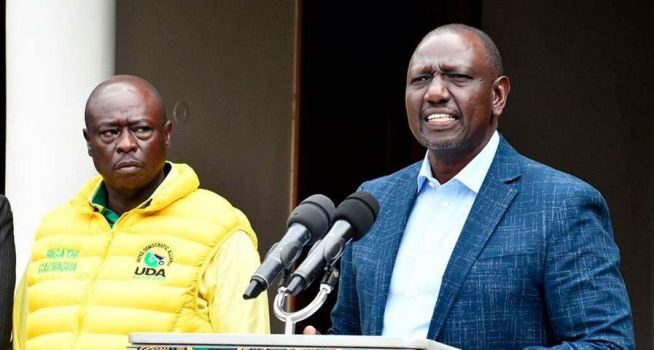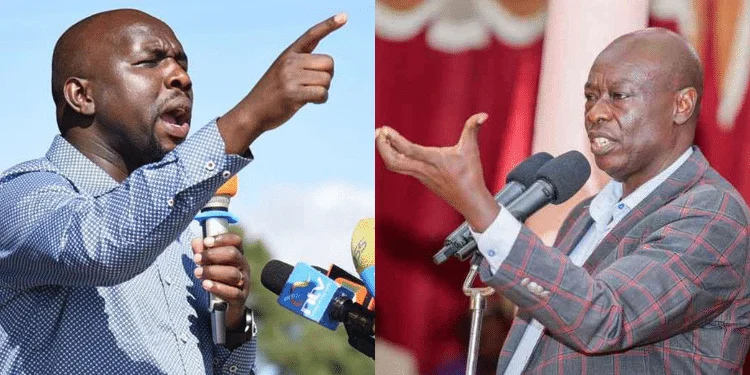
Gachagua Heads to Court of Appeal in Bid to Overturn Impeachment

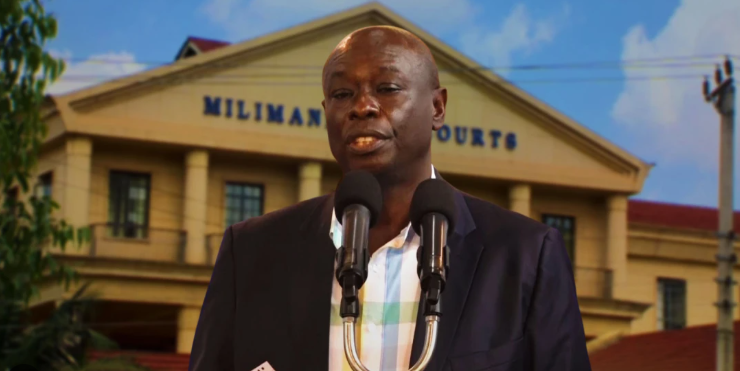
Former Deputy President Rigathi Gachagua has formally moved to the Court of Appeal in a fresh bid to overturn his impeachment, setting the stage for what is expected to be a closely watched legal and political battle with far-reaching implications for Kenya’s constitutional order.
The appeal follows a landmark ruling by a three-judge bench of the High Court which upheld the Senate’s decision to impeach Gachagua while at the same time finding that his constitutional right to a fair hearing had been violated during the process.
The judgment, which took nearly 10 hours to deliver, addressed several petitions challenging the impeachment process and outcome. In their determination, the judges declined to nullify the Senate’s resolution that removed Gachagua from office, effectively allowing the impeachment to stand. However, the court also ruled that the former deputy president’s non-derogable right to a fair hearing had been infringed after he was denied a full opportunity to participate in a critical stage of the Senate proceedings.
As a result, the court awarded Gachagua Sh50 million in compensation for the violation of his constitutional rights, a decision that has since become one of the most debated aspects of the ruling.
Gachagua’s legal team has now filed a notice of appeal, signaling its intention to challenge the High Court’s findings before a higher court. The lawyers argue that the judgment contains contradictions that should be reviewed by appellate judges.
Speaking shortly after the ruling, members of the legal team requested a verbatim transcript of the proceedings to enable them to analyze the judgment in detail and prepare their appeal. They maintained that constitutional principles must be upheld and indicated they would pursue all available legal avenues to challenge the decision.
The Court of Appeal is now expected to examine whether the High Court correctly interpreted the law and whether it was justified in upholding the impeachment despite finding that Gachagua’s right to a fair hearing had been violated.
The case has attracted significant attention from legal scholars and constitutional experts, some of whom have questioned the logic behind the judgment. They argue that if the court concluded that a fundamental constitutional right was breached, then the resulting impeachment process should have been declared invalid.
According to some legal commentators, the ruling raises important questions about the relationship between procedural fairness and the validity of political decisions made by constitutional institutions such as Parliament and the Senate. They contend that the Court of Appeal will have an opportunity to clarify whether a violation of fair hearing rights can coexist with a valid impeachment outcome.
Others, however, believe the High Court sought to strike a balance by recognizing the violation of rights while preserving the broader impeachment process. They argue that compensation may be an appropriate remedy where procedural errors occur but do not necessarily affect the overall legality of the final decision.
The legal dispute has been further complicated by the Senate’s own decision to challenge the Sh50 million compensation awarded to Gachagua. Senators expressed dissatisfaction with the ruling during a sitting held a day after the judgment, questioning why the institution should be required to pay damages while the impeachment itself was upheld.
The Senate’s appeal means that the appellate court will not only be asked to determine whether Gachagua’s impeachment was lawful but will also review whether the compensation awarded by the High Court was justified.
Beyond the legal arguments, the case carries major political significance. Gachagua remains a prominent figure in Kenya’s political landscape, and the outcome of the appeal could influence his future political ambitions as the country gradually shifts its focus toward the 2027 General Election.
Political observers note that a successful appeal could dramatically reshape the political conversation surrounding his removal from office, while an unsuccessful challenge could cement the Senate’s impeachment decision and potentially affect his standing in future political contests.
The High Court judgment has also generated widespread public debate, with Kenyans expressing mixed reactions. Supporters of the former deputy president argue that the court’s finding on the violation of fair hearing rights demonstrates that the impeachment process was fundamentally flawed. Others maintain that the judges reached the correct conclusion by allowing the Senate’s decision to stand.
As the matter heads to the Court of Appeal, attention will now shift to the next phase of a constitutional dispute that has tested the powers of Parliament, the Senate, the judiciary, and the executive. The appellate judges will be tasked with resolving critical legal questions regarding due process, fair hearing rights, and the standards required when removing a holder of one of the country’s highest offices.
With both Gachagua and the Senate preparing separate challenges arising from the same judgment, the battle is far from over. The Court of Appeal’s eventual decision is expected to have lasting implications not only for the former deputy president but also for the interpretation of constitutional safeguards in future impeachment proceedings.
For now, the country remains divided over the ruling, with supporters and critics alike awaiting the next chapter in one of Kenya’s most consequential legal and political contests in recent years.