Opposition Leaders Defend Uhuru as Ruto’s Attacks Trigger Fresh Political Clash

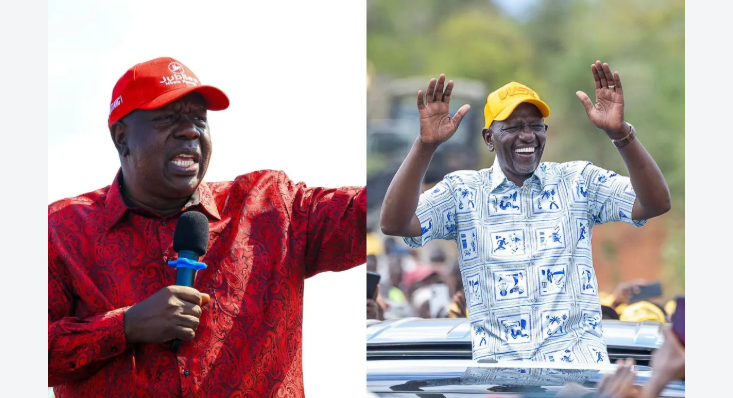
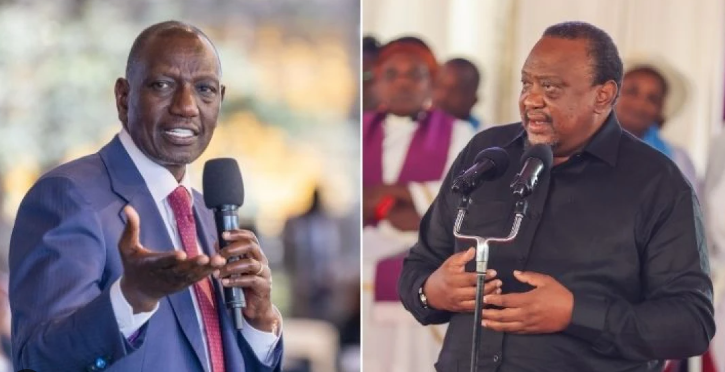
Opposition leaders have come to the defence of retired President Uhuru Kenyatta following renewed attacks by President William Ruto, accusing the Head of State of shifting attention away from the challenges facing his administration.
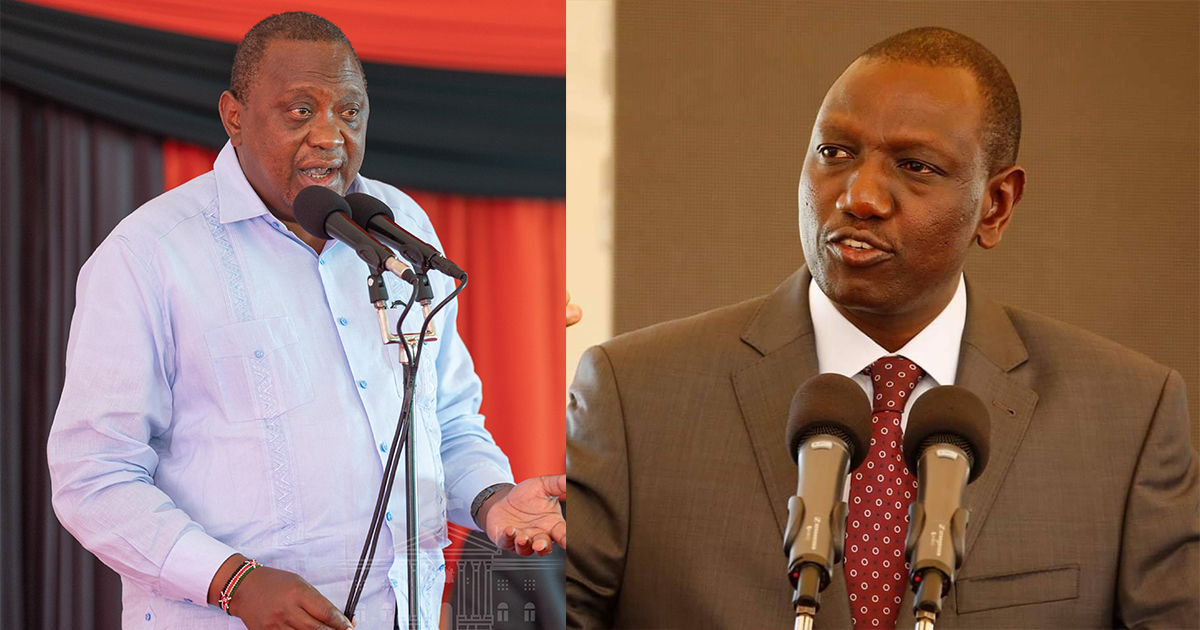
The latest political confrontation erupted after Ruto launched a fresh attack on his predecessor during his tour of the Rift Valley, accusing Uhuru of betraying him and failing to honour what he described as a political understanding between the two leaders.
Ruto questioned why Uhuru, who served as president for 10 years, did not support him after their political partnership during the 2013 and 2017 elections.
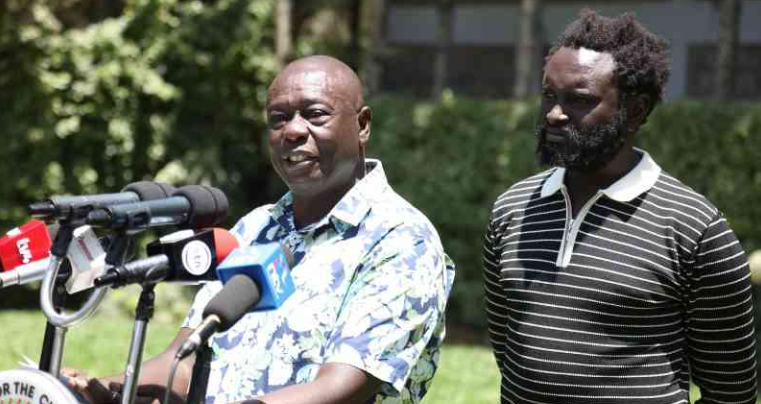
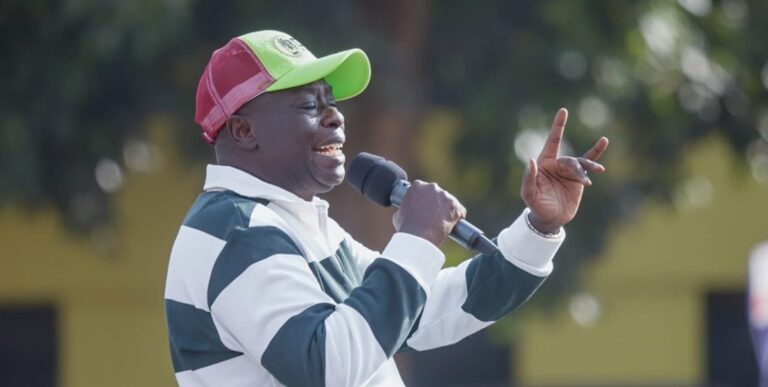
The remarks have now drawn a strong response from opposition figures, with Jubilee Party leader Fred Matiang’i and People’s Party of Kenya leader Ndindi Nyoro defending the retired president and criticising what they described as repeated personal attacks against a former Head of State.
Matiang’i said opposition leaders had deliberately avoided responding to Ruto’s attacks for some time because they respected the presidency and the institution of the Head of State.
However, he argued that the continued references to Uhuru had gone too far, particularly because the former president is no longer in office and is not responsible for the performance of the current administration.
According to Matiang’i, Ruto should concentrate on governing the country rather than repeatedly blaming his predecessor for challenges facing his government.
He challenged the President to take responsibility for his own record and urged him to respect Uhuru in the same way he expects Kenyans to respect the presidency.
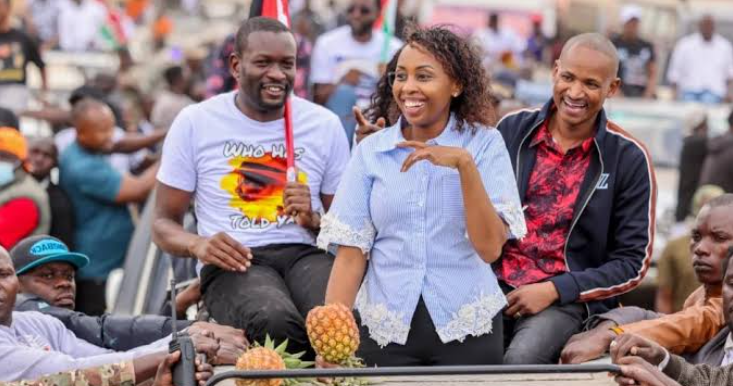
The remarks were made during political gatherings in Kimana, Kajiado County, where Matiang’i and Nyoro criticised the direction of the current administration.
The two leaders argued that Ruto’s repeated attacks on Uhuru risk creating unnecessary political divisions at a time when the country is already facing significant economic and social challenges.
Nyoro also questioned the President’s claims about improvements in Kenya’s education sector, pointing to the ongoing university lecturers’ strike as evidence of unresolved problems in the sector.
He argued that the government should address the concerns of lecturers and restore learning in public universities rather than claiming that the education sector has already been transformed.
The university strike has become one of the issues being used by opposition politicians to challenge the administration’s record, with leaders arguing that the government should focus on resolving the dispute instead of engaging in political exchanges with retired leaders.
The opposition leaders also accused Ruto of using Uhuru as a convenient target whenever his government comes under pressure.
They argued that the former president cannot be held responsible for decisions made by the current administration and that voters should ultimately judge Ruto based on his own performance since taking office in 2022.
The renewed political exchange comes as parties opposed to Ruto attempt to build a united front ahead of the 2027 General Election.
Both Matiang’i and Nyoro called on opposition leaders to avoid attacking one another and instead focus on developing a common political strategy.
They warned that internal disagreements could weaken the opposition and give the Kenya Kwanza administration an advantage during the next election.
The leaders urged politicians within the opposition camp to stop using divisive language against one another and allow voters to determine which candidate should lead the country.
Their message was that political parties should prioritise national unity over personal rivalries as they prepare for the 2027 contest.
Matiang’i said Kenya needs unity and urged opposition politicians to work together rather than spending their time fighting among themselves.
The leaders also rejected what they described as attempts to intimidate politicians through references to government projects or political labels.
They argued that development projects belong to Kenyans and should not be used as political weapons against leaders or communities.
The opposition’s criticism comes at a time when political realignments are accelerating ahead of the 2027 election. Several parties and political figures are attempting to consolidate support while negotiating possible alliances.
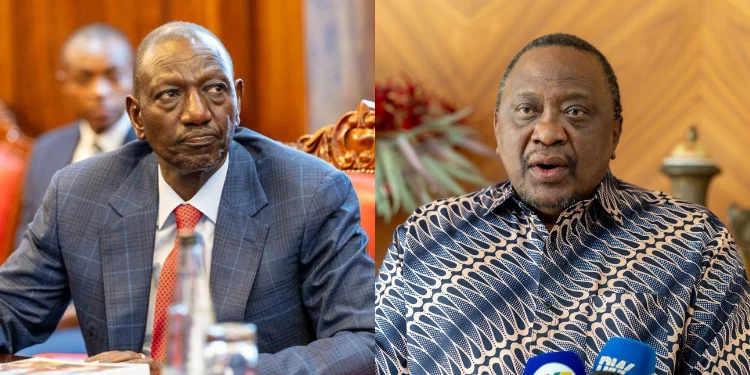
Uhuru Kenyatta, despite retiring from active electoral politics, remains an influential figure in Kenya’s political landscape. His relationship with Ruto has also become one of the most prominent political fallouts of the past decade.
The two leaders were once political allies, campaigning together in the 2013 and 2017 elections before their relationship deteriorated during Uhuru’s second term.
Their fallout became particularly visible after Uhuru’s 2018 handshake with Raila Odinga and his decision to support Raila’s presidential bid in 2022.
Ruto has repeatedly accused Uhuru of abandoning him politically, while Uhuru and his allies have defended the decisions made during his final years in office.
The latest exchange shows that the political dispute between the two former partners remains unresolved, even though Uhuru is no longer seeking the presidency.
For the opposition, however, the immediate challenge is to transform criticism of Ruto into a coherent political alternative.
Matiang’i and Nyoro therefore used their appearances in Kajiado to appeal for greater cooperation among opposition parties, arguing that political differences should be set aside in favour of a united campaign ahead of 2027.
They maintained that Kenyans, rather than political leaders, will ultimately determine the country’s political direction at the ballot box.
As the 2027 election approaches, the renewed Ruto-Uhuru confrontation is likely to remain part of the broader political debate, particularly as the opposition seeks to build alliances capable of challenging the incumbent administration.
For now, the opposition is calling for the political class to move away from personal attacks and focus instead on issues affecting ordinary Kenyans, while urging voters to make the final decision on the country’s leadership.