RAO001: How Flight Tracking Turned a Repatriation Flight into a Digital Moment of National Mourning

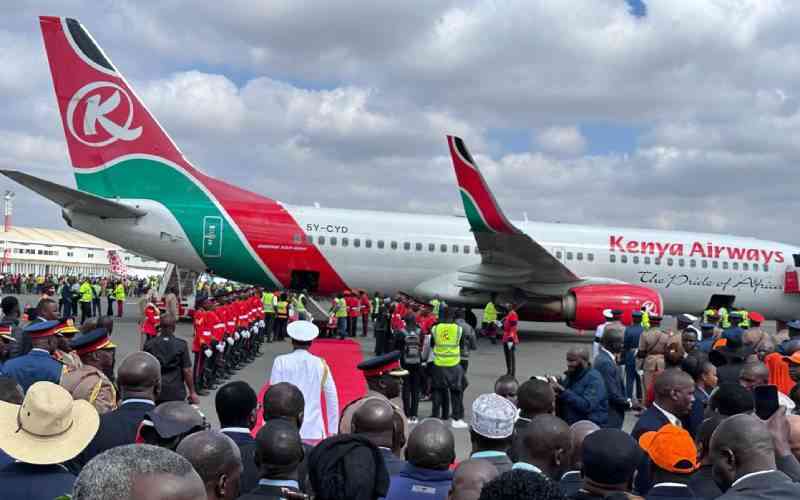
When Kenya Airways flight KQ203 departed Mumbai carrying the body of former Prime Minister Raila Odinga, it quickly transformed into more than just a cargo mission—it became a moving online memorial. Within minutes, the flight soared to the top of the global flight tracker charts, with over 54,000 people tuned in live on Flightradar24. That single aircraft became a digital symbol of grief, unity, and remembrance.
The Tech Behind the Tracking
At the heart of this global vigil is ADS-B (Automatic Dependent Surveillance–Broadcast)—a core piece of modern aviation infrastructure. Here’s how it made RAO001’s journey visible to millions:
- ADS-B Transponder
Every commercial aircraft constantly broadcasts its position, altitude, speed, and heading through an onboard transponder. - Receivers Everywhere
Ground receivers and satellites capture those signals in real-time, aggregating data across global networks. - Live Platforms
Websites like Flightradar24, FlightAware, and RadarBox receive, process, and render those broadcasts into maps that anyone can follow on a computer or smartphone. - What You See
The live map shows the aircraft icon moving across continents, with live stats like ETA, flight path, model, and flight number.
For Raila’s final flight, the public tuned in under the flight code KQ203—until a deeply symbolic switch occurred over Kenyan airspace.
Call Sign Swap: KQ203 → RAO001
In aviation, a flight’s callsign is tied to its flight plan and must adhere to ICAO rules. For the majority of the journey—south from Mumbai across India, Oman, and the Arabian Sea—the plane carried its standard identifier KQ203.
But when it crossed into Kenyan controlled airspace around 8:50 a.m., authorities made a deliberate exception. The callsign was changed to RAO001, an honorary identifier paying tribute to Raila Odinga.
This swap required coordination between Kenya Airways and the Kenya Civil Aviation Authority (KCAA), allowing local radar systems and live-tracker platforms to display the renamed identifier for the final descent into Nairobi. It was a small but powerful gesture of respect—visible not just to officials, but to the thousands watching all over the world.
A Digital Sky Becomes a Shared Space
The flurry of viewers—over 54,000 active watchers on Flightradar24—is exceptional, even by global event standards. Comparable peaks usually occur only during state funerals, royal flights, or emergency crises. For a repatriation flight to draw this kind of engagement highlights how deeply technology can intersect with national sentiment.
For many watchers, the screen became more than a map: it was a window into a collective farewell. Far from Nairobi, Kenyans could still feel connected. As RAO001 cut across the Arabian Sea and descended toward JKIA, each radar ping, each flight update, and each watcher’s screen became part of the same solemn moment.
Reflections on Tech, Memory, and Connection
- Flight tracking, once niche, now enables millions to follow global events in real-time.
- The RAO001 callsign swap exemplifies how technology protocols can be adapted for symbolic power.
- In moments of national loss, digital platforms can become tools of unity and presence.
- For all its precision and data, the tech became emotional—not about aircraft, but about memory and a nation’s final goodbye.
In the end, RAO001 didn’t just land in Nairobi—it landed in the hearts of a mourning country, bridging geography with technology, and bringing a leader home under the eyes of millions.