The 7-Second Rule: Media Council Orders Mandatory Delay for All Live Broadcasts

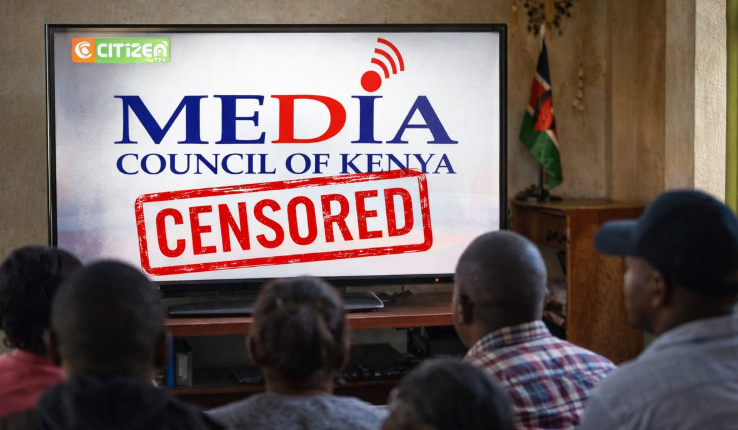
The Media Council of Kenya (MCK) has issued a sweeping new directive mandating a 7-second delay for all live broadcasts, effectively ending the era of instantaneous transmission in the country. The advisory, released on Tuesday, March 24, 2026, is aimed at providing a “digital circuit breaker” to prevent the unintended airing of hate speech, misinformation, and inflammatory content—particularly during the live coverage of political rallies and public gatherings.
Under the new rules, media houses are required to install audio and video buffer systems that hold live feeds in temporary digital storage for seven seconds before they hit the airwaves. This window allows an editor or producer to use a “dump” or “kill” button to silence any content that violates the national Code of Conduct for Media Practice. While the MCK clarified that broadcasters are not responsible for the original utterances made at public events, they become legally liable the moment those remarks are transmitted through their platforms.
The directive has sent shockwaves through the industry, with critics arguing that it fundamentally alters the cadence of public discourse. Beyond the technical cost of upgrading hardware, smaller community and regional stations are bracing for the financial strain of maintaining full-time “delay monitors.” Analysts warn that the regulation could lead to widespread self-censorship, as producers—fearful of KSh 1 million fines or the loss of broadcasting licenses—may choose to cut any controversial political dissent, regardless of whether it actually constitutes hate speech.
The mandate has ignited a firestorm of criticism on X (formerly Twitter), with many users viewing the 7-second buffer as a thinly veiled tool for state-sponsored censorship. Prominent voices like @moneyacademyKE have been quick to point out that a live delay essentially turns real-time news into pre-recorded, “sanitized” content, effectively ending the era of spontaneous public discourse. A common thread in the digital backlash is the concern that this “kill switch” will be used to silence political dissent ahead of the 2027 elections, with users noting that the 7-second window is a technical trap—questioning how a single producer can accurately identify and redact complex slurs in various local languages in such a short timeframe. Others have highlighted the “chilling effect” this will have on newsrooms, suggesting that terrified editors will choose to cut any critical voices entirely to avoid the KSh 1 million fines, thereby placing the government’s “off switch” directly into the hands of the media houses themselves.