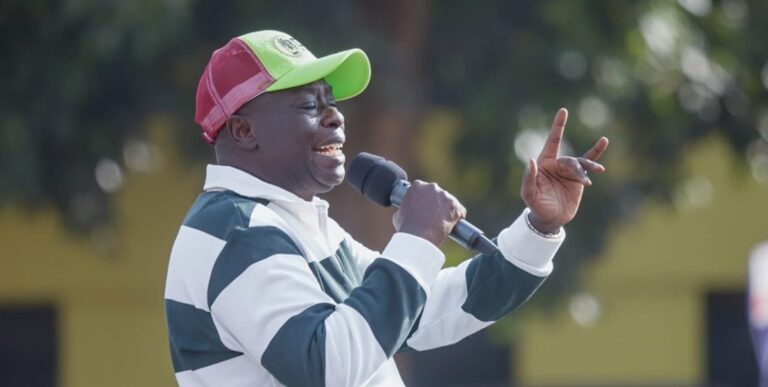
Kenya-France Relations Under Spotlight After Gachagua’s Explosive Claims


Former Deputy President has sparked fresh political and diplomatic debate after alleging that French President visited Kenya because France is increasingly losing influence in several West African countries. Gachagua claimed that France’s strained relations with parts of Francophone West Africa have pushed President Macron to seek stronger partnerships with countries like Kenya as Paris attempts to reposition itself on the African continent.
Speaking during a political address, Gachagua argued that Kenya is now being viewed by France as a strategic gateway into East Africa at a time when anti-French sentiment has continued growing in parts of West and Central Africa. In recent years, countries such as Mali, Burkina Faso, and Niger have witnessed increasing political tension with France, leading to military withdrawals, diplomatic disputes, and rising calls for reduced French influence in the region.
The former Deputy President further claimed that President Macron’s visit to Nairobi was not purely diplomatic but was also linked to economic and strategic interests involving major infrastructure and investment agreements between Kenya and France. Gachagua questioned whether some of the deals signed between the two countries primarily benefit Kenya or serve France’s broader geopolitical interests in Africa. His remarks have since fueled heated debate online, with supporters praising him for “speaking openly” about foreign influence while critics accuse him of undermining Kenya’s diplomatic relations with key international partners.
Gachagua also revisited the controversial Rironi-Mau Summit road project, alleging that French companies benefited from compensation payouts after the cancellation of earlier infrastructure agreements. He claimed that billions of shillings linked to the cancelled project became part of the wider concerns surrounding Kenya-France relations and questioned the transparency of some government decisions involving foreign contractors.
His comments come shortly after President and Macron oversaw the signing of several agreements covering infrastructure, transport, renewable energy, logistics, and investment cooperation during the Africa Forward Summit held in Nairobi. The summit was presented by both governments as a platform for expanding economic partnerships between Africa and France while promoting investment and development opportunities.
Political analysts say Gachagua’s remarks reflect the growing politicization of Kenya’s foreign policy and international partnerships ahead of future political contests. Some observers believe opposition figures are increasingly using international diplomacy and foreign investment agreements to question the government’s economic priorities, transparency, and handling of strategic projects.
At the same time, France’s changing relationship with Africa has become a major global discussion point. Analysts note that France has recently been attempting to redefine its engagement with African nations after facing resistance and declining influence in several former colonies in West Africa. Kenya’s growing economic importance and regional influence have therefore made Nairobi an increasingly attractive diplomatic and investment partner for European powers seeking stronger ties with East Africa.
The remarks by Gachagua have already intensified public conversation about foreign influence, infrastructure deals, and Kenya’s place in global diplomacy. While government officials continue defending the Kenya-France partnership as beneficial for economic growth and investment, critics insist that transparency and accountability must remain central whenever large international agreements are signed.
As political tensions continue rising, the debate surrounding Macron’s visit is likely to remain part of the broader national conversation on governance, foreign policy, economic interests, and Kenya’s strategic role in Africa’s evolving geopolitical landscape.