
Murkomen Promises Action as Hunt for Cathedral Attack Masterminds Intensifies

The National Cohesion and Integration Commission (NCIC) has raised concern over what it describes as a growing culture of political intolerance and organized violence following the disruption of a public budget forum at Nairobi’s All Saints Cathedral by suspected hired goons.
The commission warned that the incident could signal a dangerous trend as political temperatures begin to rise ahead of the 2027 General Election, cautioning leaders against using intimidation, violence, and fear to silence opposing views.
Speaking after the attack, NCIC Chairperson Dr. Samuel Kobia Muia strongly condemned the incident, describing it as an assault on democratic participation and civic engagement. He warned that political competition should be based on ideas, policies, and respectful debate rather than coercion and violence.
“Political competition should be guided by ideas, policies, and respectful debate, not coercion, violence, or fear,” said Dr. Muia.
The commission also responded to criticism that it has previously failed to act decisively against hate speech and incitement. Dr. Muia defended the institution’s record, revealing that NCIC, working jointly with the Directorate of Criminal Investigations (DCI) and the Communications Authority of Kenya, is currently handling 57 active cases involving hate speech and incitement.
In a move likely to generate debate within political circles, the NCIC chairperson announced plans to publicly expose leaders found culpable of spreading hate speech and incitement.
“We are going to come up with a list of shame for some of the leaders who are culprits so that even as Kenyans want to elect, they know who they are electing into these offices,” he said.
The condemnation from NCIC comes as security agencies intensify investigations into the June 12 attack at All Saints Cathedral. Authorities believe the disruption was carefully coordinated and are now pursuing both the perpetrators and the individuals suspected of sponsoring the violence.
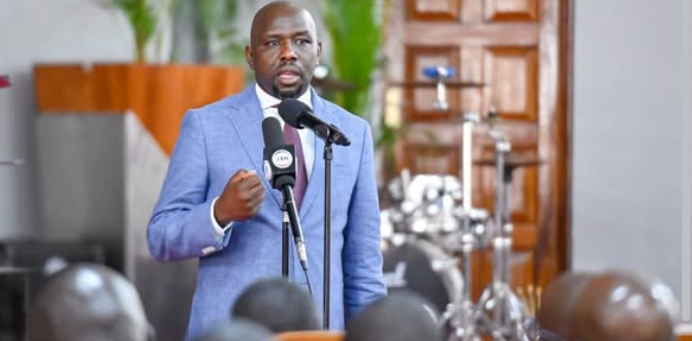
Interior Cabinet Secretary Kipchumba Murkomen confirmed that several suspects have already been arrested while investigations continue to identify the masterminds behind the incident.
“One of them was arrested immediately and a number are being arrested. We will take those people to court and they will be held to account,” Murkomen stated.
The Interior CS described the attack as unacceptable and vowed that the government would not allow criminal gangs to disrupt public gatherings, civic forums, or democratic processes. He announced that security agencies are entering a new phase of operations aimed at dismantling organized gangs operating within Nairobi and other urban centres.
As part of the government’s response, Murkomen officially launched the Nairobi Metropolitan Police Unit, a specialized security formation designed to tackle gang-related crime, political violence, and emerging urban security threats.
The new unit will be equipped with advanced surveillance technology, specialized training, modern equipment, and enhanced operational capacity to improve law enforcement within the Nairobi metropolitan region. According to Murkomen, the initiative forms part of broader reforms aimed at strengthening security infrastructure and improving rapid response capabilities.
The Cabinet Secretary also announced that the government has allocated KSh3.9 billion in the upcoming national budget to support village elders across the country. Under the programme, village elders will receive monthly stipends and play a more formal role in intelligence gathering, conflict resolution, and grassroots peace-building efforts.
Murkomen described the initiative as a major transformation in Kenya’s security and administrative structures, saying village elders would become the first line of defense in identifying emerging threats and maintaining community stability.
Beyond the cathedral attack, the Interior CS also criticized sections of the political class over the increasing use of inflammatory and vulgar language in public discourse. He argued that some leaders are setting a poor example for young people and contributing to growing political tensions.
“They speak language that is not edifying. It’s not good for our children. It’s not the kind of language you want to hear from your father or grandfather, even when criticizing an opponent,” Murkomen said.
The attack on All Saints Cathedral has reignited national debate over political violence, hate speech, and the shrinking space for civic engagement in Kenya. Civil society groups, religious leaders, and human rights organizations have called for swift action against those responsible, warning that failure to act could embolden similar attacks in the future.
As investigations continue and arrests mount, attention is now shifting to whether authorities will successfully identify the alleged sponsors behind the violence and whether the government’s new security measures will be sufficient to prevent similar incidents as the country moves closer to the 2027 election season.
The incident has become a major test for both law enforcement agencies and institutions tasked with safeguarding national cohesion, with many Kenyans now demanding accountability, justice, and stronger protection for democratic spaces.