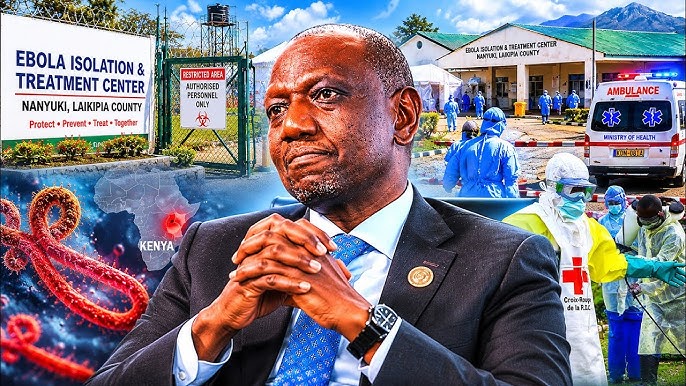
Ebola Outbreak in DRC Could Become Worst in History, Experts Warn

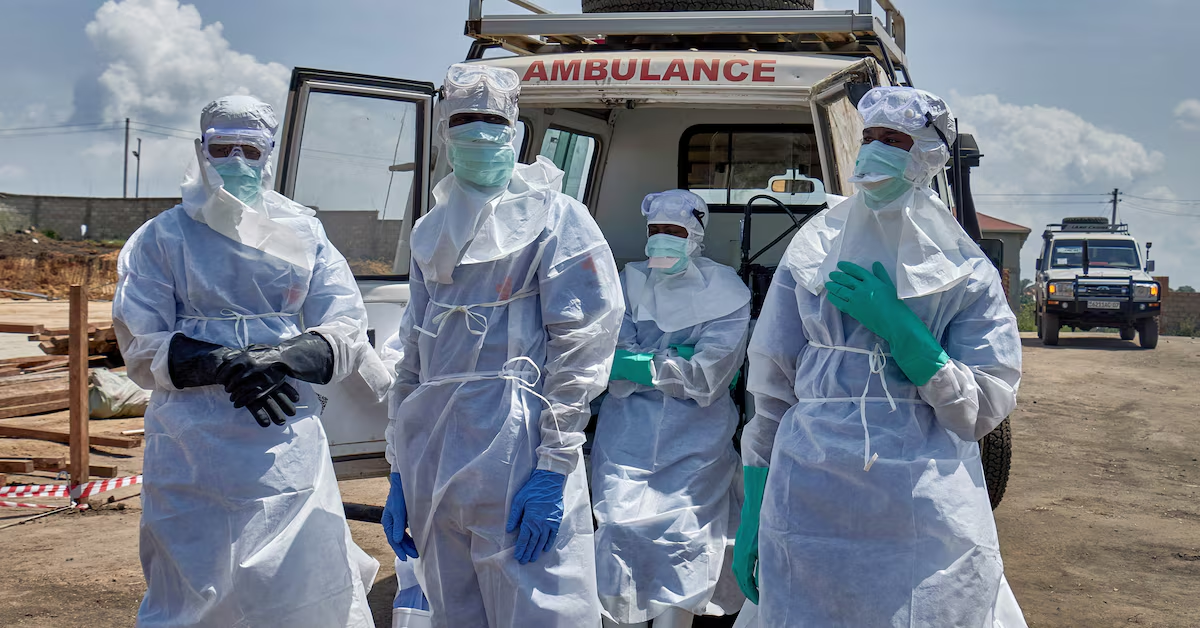
Health experts are raising alarm over the worsening Ebola outbreak in the Democratic Republic of Congo (DRC), warning that it could become one of the deadliest Ebola epidemics in history if urgent containment measures are not strengthened.
One month after the outbreak was officially declared, concerns are growing that the crisis, driven by the Bundibugyo strain of the Ebola virus, could surpass previous outbreaks, including the devastating West Africa epidemic between 2014 and 2016 that claimed more than 11,000 lives.
A major challenge facing health authorities is the failure to trace thousands of people who may have been exposed to the virus. According to the Africa Centres for Disease Control and Prevention (Africa CDC), more than 33,000 people are believed to have come into contact with confirmed Ebola patients. However, only about 4,100 individuals are currently under active monitoring, leaving more than 28,000 contacts unaccounted for.
Public health experts say contact tracing remains one of the most effective tools in controlling Ebola outbreaks. Individuals who have been exposed to infected patients must be identified, monitored and isolated if symptoms develop to prevent further transmission. The large number of untraced contacts has raised fears that the virus could continue spreading undetected in affected communities.
The situation is particularly challenging in remote parts of the DRC, where surveillance teams are struggling to reach communities due to difficult terrain, limited resources and insecurity. In some areas, violence and resistance from local communities have disrupted response efforts, making it harder for health workers to identify cases and provide treatment.
Treatment centers are also facing mounting pressure as the number of infections continues to rise. Health workers report that mistrust and misinformation have fueled resistance among some residents, while attacks on treatment facilities have further complicated containment efforts.
The outbreak has already spread beyond the borders of the DRC, with neighboring Uganda confirming at least 19 Ebola cases linked to the outbreak. Despite the new infections, Ugandan authorities remain optimistic and say the country could be declared Ebola-free within four weeks if no additional cases are recorded. Uganda has reportedly gone more than 11 consecutive days without registering a new infection.
According to the latest figures, more than 800 Ebola cases have been confirmed during the current outbreak, with at least 181 deaths reported so far. While the outbreak has already become one of the deadliest on record, health officials say the true scale could be much larger if surveillance gaps are not addressed quickly.
There have also been positive developments, with at least 59 patients recovering from the disease. Meanwhile, researchers are accelerating efforts to test potential vaccines, antiviral drugs and monoclonal antibody treatments that could help reduce infections and save lives.
The World Health Organization (WHO) and Africa CDC are now seeking approximately KSh67 billion to strengthen response efforts, improve surveillance, support treatment centers and accelerate vaccine research.
As health authorities race against time, experts warn that the coming weeks will be critical in determining whether the outbreak can be brought under control or escalates into one of the most severe Ebola crises the continent has ever faced.