Ebola Facility Debate Intensifies as Ruto Explains Government Position

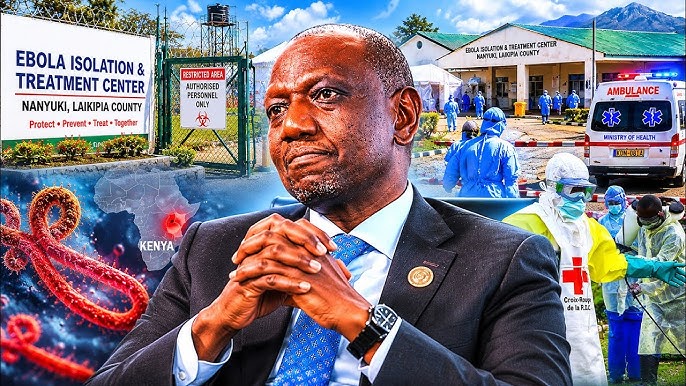
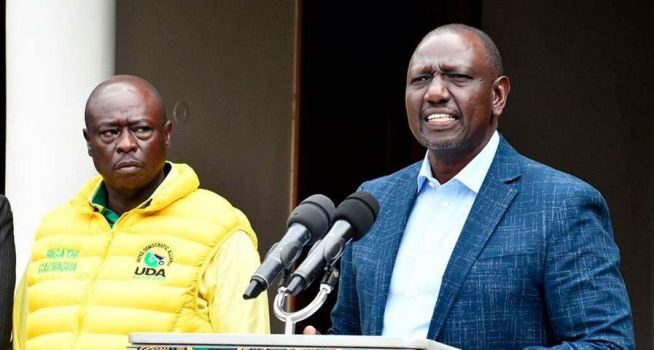
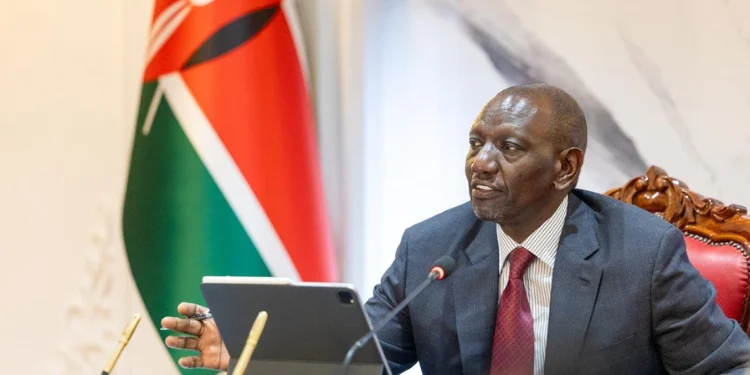
President William Ruto has strongly defended the government’s decision to establish an Ebola isolation facility in Laikipia, insisting that the project is part of a broader national preparedness strategy aimed at protecting Kenyans from potential outbreaks of the deadly disease.
Speaking during a high-level international engagement in France, President Ruto revealed that Kenya began strengthening its Ebola response measures immediately after the World Health Organization declared an Ebola outbreak in the Democratic Republic of Congo.
According to the President, the government embarked on an ambitious plan to establish 23 Ebola isolation centres across the country, train healthcare workers, strengthen border surveillance, and enhance testing capacity to ensure Kenya is adequately prepared in the event of an outbreak.
“When Ebola was announced by the World Health Organization, I did the responsible thing. We immediately embarked on building isolation centres, preparing, training staff, making sure that we test people around our borders,” President Ruto stated.
The President disclosed that the United States government was the first and, so far, the only country that provided financial support to Kenya’s Ebola preparedness programme. He said the support was directed towards strengthening health resilience measures in both Kenya and the Democratic Republic of Congo.
Ruto further explained that the controversial Laikipia facility is not a treatment centre as some critics have claimed, but an isolation facility that would form part of the wider network of 23 centres being established nationwide.
According to the President, the United States requested permission to construct one isolation facility that could be used in the event an American citizen required isolation while in the region. He emphasized that the arrangement does not alter the facility’s purpose and that the same services would have been available through Kenya’s broader preparedness infrastructure.
“They did request us to allow them one facility in the event that there would be any American that would require isolation, not treatment, isolation,” Ruto explained.
The President maintained that granting the request was consistent with Kenya’s public health objectives, arguing that the facility would contribute to the country’s overall disease preparedness capacity rather than serve foreign interests alone.
The remarks come amid growing public debate and protests in parts of Laikipia County, where some residents have expressed concern about the proposed facility and demanded greater transparency regarding its operations and intended use.
Beyond the Ebola issue, President Ruto also used the platform to articulate Kenya’s position on international partnerships and natural resource management. He said Africa is moving away from relationships centered on extraction of raw materials and is instead pursuing partnerships based on investment, value addition, and mutual benefit.
The President revealed that Kenya is finalizing agreements with the United States involving rare earth minerals and critical resources, emphasizing that processing and value addition will take place within Kenya rather than abroad.
“We are going to reject relationships that are based on extraction of our natural resources. We are instead going to build relationships with partners who are interested in investments in our continent,” he said.
Ruto further argued that Africa should not be viewed as a burden by the international community but as a major contributor to global growth, innovation, and economic progress.
His comments are likely to reignite debate over the Laikipia Ebola facility, a project that has generated significant political and public attention in recent weeks. While the government insists the centre is a critical component of national health security, critics continue to demand more information about the agreement and its long-term implications.
As discussions continue, the administration maintains that the facility is intended to strengthen Kenya’s preparedness against future disease outbreaks while enhancing the country’s public health infrastructure.