Gachagua, Matiang’i and Kalonzo Close Ranks as Opposition Moves to Heal Rift Ahead of 2027

Kenya’s opposition has moved to ease growing tensions within its ranks after three of its leading figures—Rigathi Gachagua, Fred Matiang’i and Kalonzo Musyoka—held talks aimed at restoring unity ahead of the 2027 General Election.
The meeting brought together Gachagua, the leader of the Democracy for the Citizens Party (DCP), Jubilee Party leader Fred Matiang’i and Wiper leader Kalonzo Musyoka at a time when public disagreements had raised questions about the future of the opposition’s efforts to mount a united challenge to President William Ruto.
The talks followed several days of increasingly sharp exchanges between Gachagua and Matiang’i over how the opposition should be organized and how different political formations should work together.
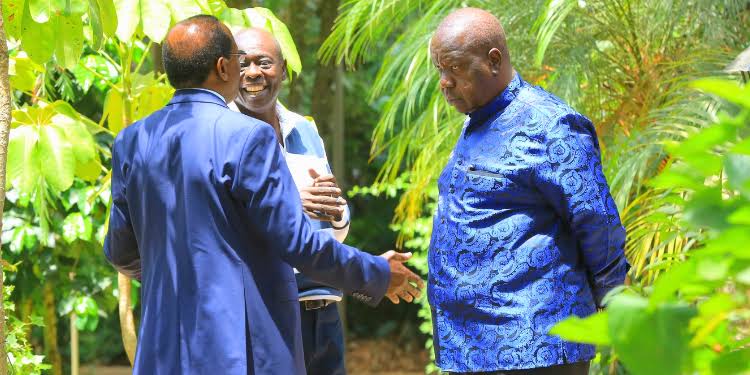
The three leaders later presented a united front, with photographs showing them together during the meeting. The images appeared intended to reassure supporters that political disagreements had not destroyed their broader commitment to working together.
The meeting has been interpreted as an attempt to cool tensions and reassure supporters that the opposition remains committed to cooperation despite disagreements over strategy, leadership and the eventual presidential ticket.
Kalonzo Musyoka has emerged as an important figure in efforts to maintain cohesion among the opposition principals. The meeting came after concerns that the public disagreements between Gachagua and Matiang’i could undermine attempts to establish a common political platform before the 2027 election.
Gachagua later confirmed that he had met Matiang’i for breakfast and maintained that the opposition principals remained committed to working together. He also referred to discussions with other opposition figures, including Nairobi Senator Edwin Sifuna, Martha Karua and Eugene Wamalwa, saying they remained committed to the broader unity effort.
The latest meeting follows a week of political exchanges that had created uncertainty over whether the emerging opposition alliance could survive competing presidential ambitions.
Gachagua had advocated for an alliance bringing together major opposition political formations, while Matiang’i had warned against approaches that could allow one faction or region to dominate the wider coalition.
Matiang’i previously criticized what he described as “majoritarian arrogance,” arguing that such an approach could create divisions within the opposition instead of strengthening it. He has maintained that the eventual presidential candidate should emerge through an inclusive process acceptable to the wider opposition rather than being imposed by a small group.
The disagreements fueled speculation that the opposition could split before settling on a presidential candidate for 2027. The Karen meeting, however, appears to have temporarily eased those concerns.
Speaking during political engagements after the meeting, Gachagua sought to dismiss reports of a major breakdown within the opposition. He argued that disagreements between political leaders are normal and should not automatically be interpreted as evidence that the coalition is collapsing.
Gachagua also blamed some supporters and social media users for escalating differences between opposition leaders. He urged politicians and their supporters to avoid personal attacks, arguing that online confrontations could undermine relationships among leaders who are privately engaged in consultations.
The former Deputy President said the opposition remained committed to presenting a united front in the 2027 General Election, although the identity and timing of the eventual presidential candidate have not been settled.
Kalonzo has similarly continued to advocate for opposition leaders to work together, emphasizing that differences in opinion should not necessarily be interpreted as disunity.
While the latest meeting has helped project an image of unity, one of the biggest questions facing the opposition remains unresolved: who will ultimately carry the coalition’s presidential flag in 2027?
Gachagua, Matiang’i and Kalonzo are all prominent figures in the opposition discussions, while other leaders, including Sifuna, Karua and Wamalwa, remain part of the wider consultations.
The opposition has therefore established a common desire to work together, but translating that agreement into a formal structure and an acceptable leadership arrangement could prove more difficult.
The coalition will eventually have to determine how the different parties will share responsibilities, how a presidential candidate will be selected and how supporters from different political and regional backgrounds will be brought together under one campaign structure.
For now, the Karen meeting has provided the opposition with an opportunity to reset after several days of public disagreements.
The photographs of Gachagua, Matiang’i and Kalonzo standing together offered supporters a visible demonstration that the three leaders remain willing to sit at the same table and pursue negotiations despite their differences.
The real test, however, will come in the months ahead. Whether the latest reconciliation develops into a durable political arrangement will depend largely on how the leaders manage competing ambitions, party interests and disagreements over the coalition’s structure.
With the 2027 election approaching, the opposition faces pressure to move beyond declarations of unity and establish a clearly defined political organization capable of campaigning under a common banner.
For now, Gachagua, Matiang’i and Kalonzo are signaling that their differences have not destroyed the broader opposition project. Their latest engagement suggests that consultations will continue as the leaders seek a formula that can keep the opposition together ahead of the next election.