Western Kenya Leaders Step Up Ruto Re-Election Campaign as ODM Faces Fresh Defections

Leaders from Western Kenya who are part of President William Ruto’s broad-based government arrangement have intensified efforts to mobilize support for his re-election in 2027, putting the region at the centre of an increasingly competitive political battle.
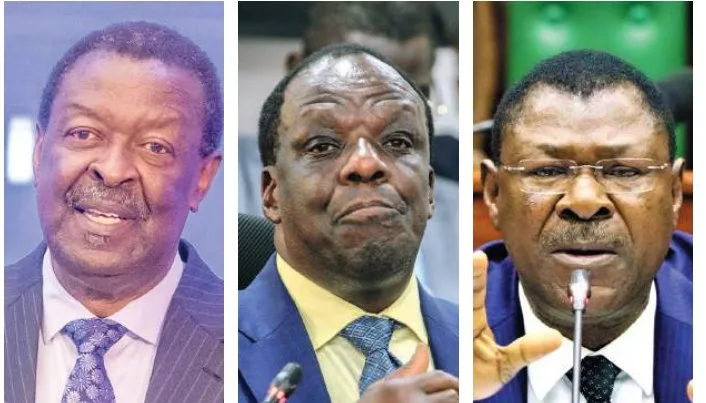
National Assembly Speaker Moses Wetang’ula, Prime Cabinet Secretary Musalia Mudavadi and Bungoma Governor Kenneth Lusaka have been among the prominent figures making the case for another term for Ruto, citing government development projects and what they describe as gains made across Western Kenya.
The campaign comes as political loyalties in the region continue to shift, with defections from the Orange Democratic Movement (ODM) raising questions about the party’s strength and future influence following the death of its longtime leader, Raila Odinga.
Western Kenya is considered an important electoral battleground ahead of the 2027 General Election. The region has a large voting population, making its political alignment a significant factor in the contest for the presidency. Recent analysis has placed the region’s projected voting population at more than 3.2 million. Monitor
Wetang’ula has been using the performance of the sugar sector to demonstrate what he considers the benefits of the Ruto administration.
While addressing residents, the Speaker pointed to the revival of sugar factories, including Nzoia and Mumias, as evidence that the government is responding to economic challenges facing the region.
He also referred to efforts to address outstanding salary obligations at Mumias, saying money had been provided to help clear accumulated wage arrears.
The revival of the sugar industry has long been a major political and economic issue in Western Kenya, where thousands of farmers depend on sugarcane farming for their livelihoods.
Mudavadi has also been at the forefront of the campaign for Ruto’s second term. Accompanied by Governor Lusaka, he reiterated that the government intends to complete development projects within their contractual timelines.
The leaders are presenting continuity as an important argument for supporting Ruto in 2027, maintaining that completing ongoing projects requires the administration to remain in office.
Lusaka has similarly emerged as an important mobilizer for the President in Western Kenya. He has repeatedly argued that the region should focus on securing its political interests through cooperation with Ruto rather than pursuing competing political agendas.
The push for Ruto’s re-election, however, is taking place alongside intense political realignments within Western Kenya.
Several ODM leaders have either defected or expressed concerns about the party’s direction, raising questions about whether ODM can retain the level of influence it enjoyed under Raila Odinga.
Budalang’i MP Raphael Wanjala has called on ODM’s leadership to address concerns among members instead of remaining silent as political defections continue.
Wanjala argued that the party needs to engage its members and establish why leaders are leaving, particularly at a time when political alliances are being reorganized ahead of the 2027 election.
The movement of politicians across parties has become increasingly visible as the election approaches. Recent reports have documented defections and potential realignments involving ODM, UDA, Jubilee and emerging political formations. Nation Africa
The situation has created a complicated political environment in Western Kenya, where some leaders are supporting Ruto’s re-election while maintaining their identities and positions within opposition-linked parties.
Kakamega Governor Fernandes Barasa, for example, has sought to balance his support for the broad-based arrangement with his position as an ODM leader.
Barasa has stated that he supports the broad-based government arrangement but intends to defend his gubernatorial seat on an ODM ticket.
His position illustrates the political balancing act facing several leaders who want to maintain their party identities while participating in an arrangement that supports Ruto’s administration.
The question of what Western Kenya expects in return for supporting Ruto is also becoming increasingly important.
Some regional leaders have demanded that Ruto select his running mate from Western Kenya in 2027, arguing that the region’s numerical strength and political support deserve greater representation at the highest levels of government. Monitor
Wetang’ula has been among the politicians mentioned in discussions about the position, while Mudavadi and other Western leaders have also featured prominently in succession calculations.
At the same time, some leaders have argued that Western Kenya should concentrate on building toward the presidency beyond 2027 rather than making the Deputy President position the central demand of the current election.
This has created another layer of competition within the pro-Ruto camp, with different leaders and factions promoting different strategies for the region.
Wetang’ula and Mudavadi are both influential figures in Western Kenya, while Lusaka has been actively involved in grassroots mobilization for the President.
The political contest is therefore not simply between Ruto’s supporters and his opponents. There is also competition within the President’s camp over who will speak for Western Kenya and what political rewards the region should seek from its support.
Beyond 2027, the region is already being drawn into discussions about the 2032 succession. Some Western leaders have openly argued that the region should use the next election to position itself for a future presidential bid. The Star
For Ruto’s allies, however, the immediate objective is to consolidate support for his re-election and demonstrate that his administration has delivered tangible development to Western Kenya.
For ODM, the challenge is to maintain its organizational strength while dealing with defections and competing political movements seeking to expand their influence in the region.
The situation is particularly significant following Raila Odinga’s death, which has altered the political calculations in a region where his influence was considerable.
With the 2027 election approaching, Western Kenya is increasingly becoming a key battleground. Ruto’s allies are seeking to translate government development projects and political partnerships into votes, while ODM and emerging opposition formations are working to retain or expand their influence.
The biggest test for the pro-Ruto camp will be whether its current mobilization can translate into a unified regional voting bloc. For ODM, the challenge will be maintaining cohesion and preventing further defections as politicians weigh their options ahead of the polls.
The political contest in Western Kenya is therefore likely to intensify in the months ahead, with development, party loyalty, the Deputy President position and the region’s longer-term presidential ambitions all shaping the debate.