Gachagua Takes Aim at Ruto, Mudavadi and Wetang’ula in Fiery Western Kenya Rally

Former Deputy President Rigathi Gachagua has intensified his criticism of President William Ruto’s administration and some of its key allies, accusing leaders from Western Kenya serving in government of failing to deliver meaningful development to the region despite occupying some of the most powerful positions in the country.
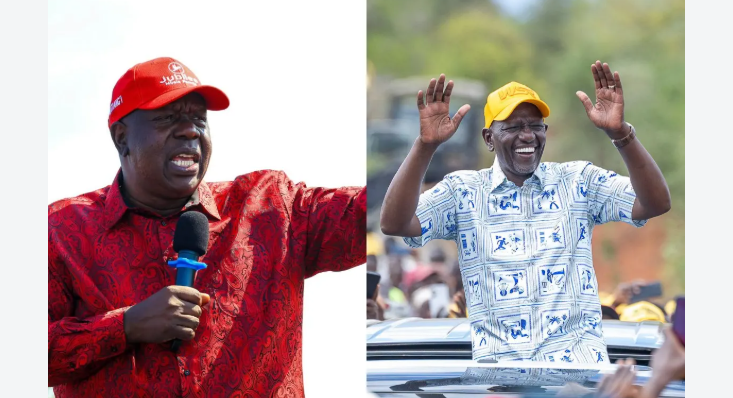
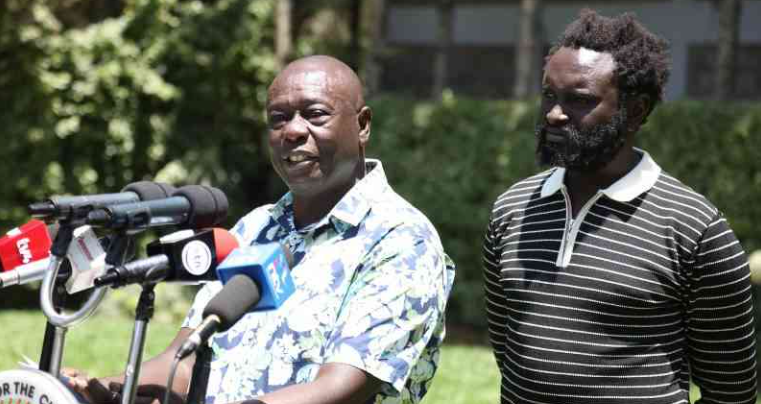
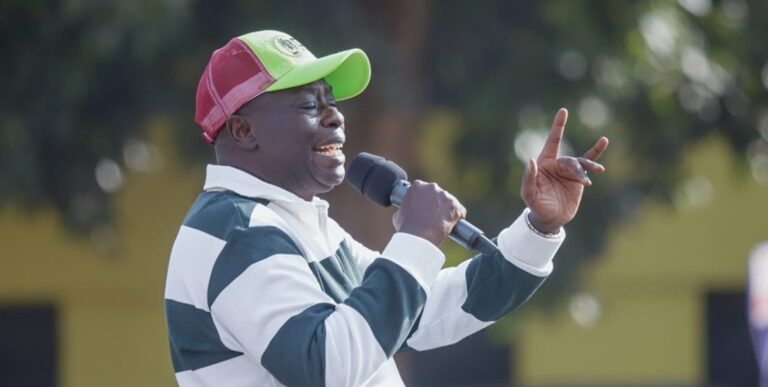
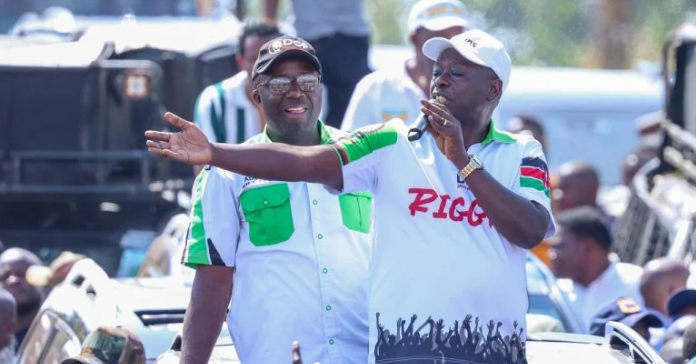
Addressing supporters during a rally in Western Kenya, Gachagua dismissed claims that leaders can only help their communities while serving in government, insisting that speaking the truth and holding leaders accountable does not require one to occupy public office.
“Huhitaji kuwa ndani ya ofisi kusaidia watu. Hata ukiwa nje ya ofisi ndio uko na ile mdomo kali ya kueleza maeneo ya ukweli,” Gachagua said, arguing that leaders outside government are often better positioned to speak openly about issues affecting ordinary citizens.
The former Deputy President took direct aim at Prime Cabinet Secretary Musalia Mudavadi, questioning the pace of development projects in his home region. Gachagua cited a road project near Mudavadi’s home area, claiming it remains incomplete years after it was promised.
“Hata barabara ya kwenda Mululu ambaye Uhuru Kenyatta alisema ijengwe pahali Musalia anakaa haijajengwa. Sasa ni mwaka wa nne,” he said.
Gachagua also challenged President Ruto’s recent criticism of opposition leaders, particularly comments directed at Wiper leader Kalonzo Musyoka over development records. He argued that the government should first account for projects under its own administration before attacking leaders who are not part of government.
“Wewe William Ruto kama wewe ni muungwana, kabla hujaongea mambo ya Kalonzo, jenga kwanza barabara ya Musalia Mudavadi,” Gachagua told the crowd.
In some of his strongest remarks, the former Deputy President accused both Mudavadi and National Assembly Speaker Moses Wetang’ula of prioritizing their political positions over the interests of Western Kenya residents.
“The only thing walisukuma ni kazi yao. Ingine yote wameshindwa,” he claimed, alleging that the two leaders focused on securing and protecting their government positions while neglecting promises made to the people of the region.
Gachagua further claimed that he had previously urged Mudavadi and Wetang’ula to join him in demanding that the Kenya Kwanza administration fulfill commitments made to their supporters. According to him, both leaders declined, choosing instead to protect their positions within government.
“Nilijaribu kuambia Musalia na Wetang’ula tuanze kukaza huyu mtu atufanyie ile tuliagana. Musalia akaniambia, ‘wacha nichunge kazi yangu kwanza.’ Wetang’ula akaniambia, ‘hii kiti ya Spika ni tamu sana’,” Gachagua alleged.
The DCP leader portrayed himself as a politician who paid the price for speaking out against government decisions, saying he was removed from office because he chose to raise difficult questions on behalf of Kenyans.
“Mimi nikauliza maswali kwa niaba ya watu wa Mlima na Wakenya, na ni kweli nikapata shida nikafukuzwa. Lakini hata kama nilifukuzwa, nilitetea nyinyi,” he said.
Gachagua also praised Mumias East MP Peter Salasya, describing him as one of the few leaders who openly supports issues affecting Western Kenya. In a statement that drew laughter from the crowd, he claimed Salasya possessed greater political courage and sharper judgment than some of the region’s more senior leaders.
The former Deputy President used the rally to renew his call for political cooperation between Mt Kenya and Western Kenya, arguing that the two regions have historically worked together to influence the country’s direction and can do so again.
“Let history repeat itself. Watu wa Mlima na watu wa Mulembe tutatembea pamoja na tutapata maendeleo,” he declared.
Gachagua also accused the government of attempting to frustrate opposition activities in Western Kenya by restricting political gatherings and increasing security deployments during visits by opposition leaders. He argued that such actions would not change the political mood on the ground.
In one of the most memorable moments of the speech, Gachagua used a colorful analogy to suggest that the government was addressing symptoms rather than the root causes of public dissatisfaction.
“The problem uko nayo William Ruto, kuzuia sisi kuongea na watu wa Western Kenya si suluhisho. Deal with the real issue,” he said, insisting that growing frustration among voters cannot be resolved through restrictions on political activities.
His remarks come as political competition intensifies ahead of the 2027 General Election, with Western Kenya increasingly emerging as a key battleground in the contest between President Ruto’s allies and opposition figures seeking to build a broad coalition against the Kenya Kwanza administration.
As the battle for the region gathers momentum, Gachagua’s latest comments are likely to fuel fresh debate over development, political loyalty, and the future direction of Western Kenya politics.