Ruto’s Meru State Lodge Plan: Symbolism, Spending, and the Politics of a New City

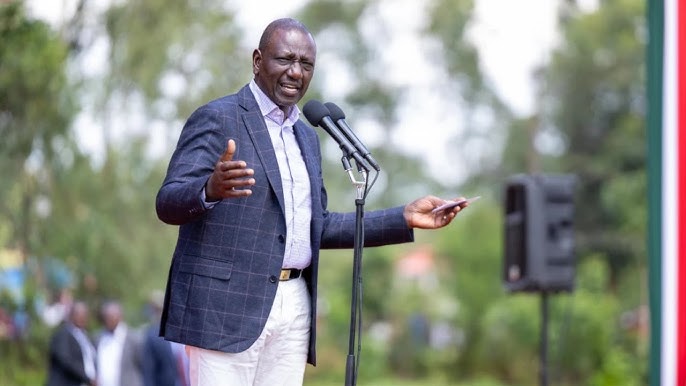
President William Ruto’s announcement that his administration will construct a State Lodge in Meru Town by December 2025 has stirred both excitement and scrutiny — a move that blends symbolism, politics, and questions about fiscal prudence.
Speaking at the AIPCA Church in Meru on Sunday, the President said the new residence would facilitate his stays in the region as Meru transitions into Kenya’s sixth city, following Eldoret’s elevation earlier this year.
“There can’t be a city here, and I fail to show up,” Ruto said, adding that he had already directed his team to have the facility ready by December next year.
“I will come and discuss issues of Meru, Tharaka Nithi, Isiolo and the rest.”
The statement signals Ruto’s growing focus on regional presence and decentralised state infrastructure, aligning with his administration’s rhetoric of equitable development and “bottom-up governance.”
Billions Set Aside for Roads and Markets
To accelerate Meru’s elevation to city status, Ruto revealed that the government has set aside Ksh20 billion for the upgrading of roads across the county and Ksh800 million to modernize Gakoromone Market — a key commercial hub.
While these investments are expected to boost local infrastructure and trade, they also raise questions about Kenya’s widening public spending at a time when the Treasury is struggling with liquidity, pending bills, and growing debt obligations.
Political analysts note that the Meru announcement may be as much a political maneuver as a development agenda, strategically placing Ruto at the heart of a region whose politics have remained fluid since 2022.
“Ruto understands the symbolic power of visibility,” said one governance analyst. “A State Lodge in Meru sends a message that the President wants to be physically and politically anchored in Upper Eastern, where his support is not as solid as in other Mount Kenya counties.”
Environmental and Ethical Concerns Over Imenti Forest
However, the proposal has drawn immediate backlash from environmental activists amid reports that the State Lodge could be constructed on gazetted forest land in the Imenti Forest.
In a letter to Forestry Principal Secretary Gitonga Mugambi, the Green Belt Movement (GBM) demanded clarification on whether the government had initiated any process to excise part of the forest.
“We seek urgent clarification on the alleged plan to excise part of Imenti Forest to construct a State Lodge and a golf course,” GBM wrote.
“This follows widespread concern among communities who rely on this forest for their livelihoods.”
The movement has requested a written response within seven days, asking whether alternative sites had been explored and whether due environmental procedures were being followed.
The pushback reflects a broader national debate over land use, conservation, and executive privilege — echoing past controversies where public land was earmarked for state residences or elite projects.
A Growing List of Presidential Residences
The proposed Meru Lodge would join an expanding list of State Lodges across the country, including the planned Turkwel Lodge in West Pokot, budgeted at Ksh230 million in 2024.
Although the cost of the Meru project has not been disclosed, critics argue that the government should prioritise economic relief and public service delivery over additional executive infrastructure.
Nonetheless, for Ruto, the Meru Lodge is not merely about accommodation — it’s a political statement: one that reasserts his government’s reach, visibility, and symbolic permanence beyond Nairobi.
Whether it becomes a genuine driver of regional development or another emblem of executive excess will depend on how the project unfolds in the coming year.