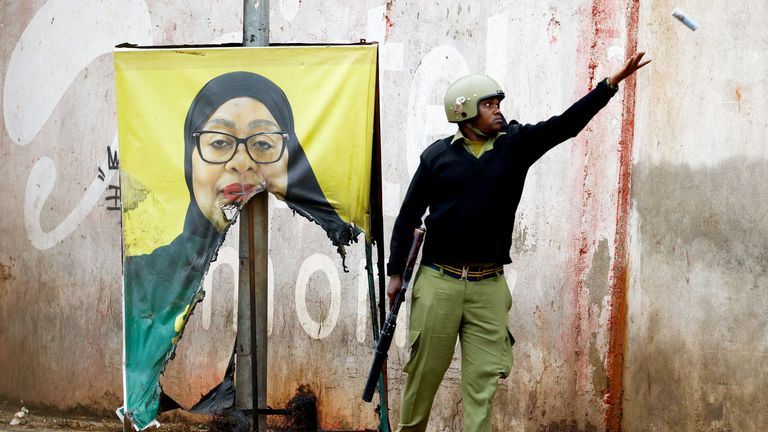
European Parliament Unanimously Condemns Tanzania Election Violence


The official response from the Tanzanian government to the European Parliament’s strongly worded resolution—which condemned the conduct of the October 2025 elections, cited post-election violence, and demanded the immediate release of opposition leader Tundu Lissu—centered firmly on the principles of national sovereignty and the independence of the judiciary. In a statement issued by the Ministry of Foreign Affairs, Dar es Salaam criticized the EU Parliament’s action, characterizing the resolution as based on “incomplete or partisan information” and asserting that it constituted an “inappropriate interference” in Tanzania’s internal affairs. This diplomatic maneuver sought to reframe the human rights and democratic concerns raised by the EU as an issue of external overreach, positioning the government as the defender of constitutional order against foreign intrusion.
A key pillar of Tanzania’s argument was the constitutional separation of powers, particularly the assertion of an independent judiciary. The government maintained that all legal matters, including the high-profile treason charges leveled against Tundu Lissu, were being handled impartially by the courts in accordance with national laws and international best practices. By emphasizing the rule of law, the statement directly challenged the EU Parliament’s call for the executive to intervene and release the opposition figure, arguing that such a request was contrary to the very principle of judicial independence the EU claims to advocate. This defense strategically attempts to deflect criticism from the political nature of the arrests by insulating the proceedings under the guise of standard legal due process.
Despite the Tanzanian government’s insistence on sovereignty and legal process, international observers and the European Parliament pointed to a broader pattern of democratic backsliding that preceded the electoral period. Reports detailed restrictions on media and civil society, the arbitrary arrest of opposition supporters, and the disqualification of thousands of opposition candidates in the run-up to the elections. The EU resolution directly addressed these issues, urging the Commission and Council to halt direct budget support to the Tanzanian authorities and instead prioritize funding for civil society and human rights defenders. Thus, while the Tanzanian government focused its rebuttal narrowly on judicial sovereignty regarding Tundu Lissu’s case, the European position encompassed systemic concerns about the shrinking civic space and state repression, suggesting that the EU’s proposed measures are a direct consequence of a sustained failure to uphold democratic governance and fundamental freedoms.