
From “Tragic Accident” to Murder Accusations: The Explosive Shift in the Ruto vs. Gachagua Feud

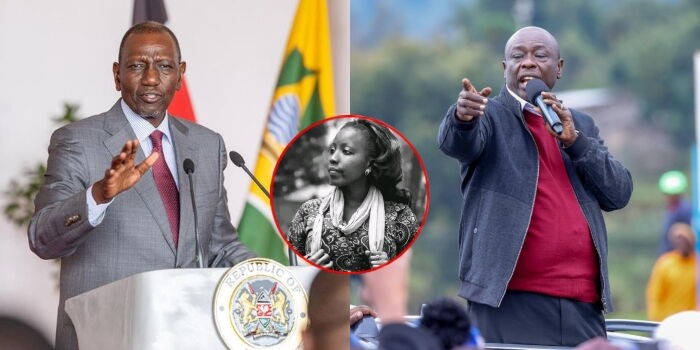
The Kenyan political landscape has been thrown into a tailspin following staggering accusations linking former Deputy President Rigathi Gachagua to the 2019 death of popular blogger and social media personality Maureen Kinyua (also known as Maureen Gadiga). However, the internet has quickly “brought the receipts,” resurfacing a video of a phone call from May 2019 where William Ruto personally called Maureen’s mother to offer his condolences.
In the 2019 recording, the conversation describes the daughter’s passing as a “tragic road accident.” At the time, official police records and a DCI statement classified the incident as a hit-and-run near Sagana Catholic Church in Nyeri County. The driver involved was even charged in a Karatina court with causing death by dangerous driving. This sudden shift from a “tragic accident” to a “murder accusation” years later has led many to question whether this is a genuine quest for justice or a calculated move in an ongoing high-stakes political rivalry.
While these claims have gained massive traction recently, the seeds of this narrative were planted earlier by political figures like Moses Kuria, who alleged a cover-up involving the blogger’s death. At the time, many dismissed these as typical political “white noise.” However, the decision to elevate these claims to the national stage now has given them a new level of weight and public scrutiny.

The central question emerging from neutral observers is one of timing and prior knowledge. If high-ranking officials truly believed there was involvement in a murder cover-up back in 2019, it raises uncomfortable questions about why those same individuals were cleared for the highest offices in the 2022 election. This paradox has divided public opinion: some see it as a long-overdue exposure of a dark secret, while others view it as the weaponization of a years-old tragedy to settle modern political scores.
Beyond the political chess match, the “reopening” of this case has sparked a serious conversation about the ethics of using grief as a political tool. Maureen Kinyua passed away nearly seven years ago, and her family had presumably begun the long, painful process of healing. By reclassifying her death as a potential murder in the public eye, there is a significant risk of reopening deep wounds for the family and friends she left behind.
If there was indeed foul play, this public attention might finally bring a hidden truth to light. However, if these remain unverified claims used for leverage, it serves only to cause further distress to a family that has already suffered a profound loss. As the back-and-forth between rival political camps intensifies, the memory of Maureen Kinyua remains caught in the crossfire of an increasingly volatile climate.