Why Ruto’s Security Chief Lost His Job After the Kilifi Incident


President William Ruto’s security team has undergone a dramatic overhaul following the shocking security breach in Kilifi that exposed serious weaknesses within the Presidential Escort Unit and triggered nationwide debate about the safety of the Head of State.
At the center of the shake-up is Noah Kirwa Maiyo, the former Commandant of the Presidential Escort Unit (PEU), who was removed from his position and redeployed to Vigilance House after the incident. The changes came only hours after a young man managed to bypass multiple layers of presidential security and approach President Ruto while he was addressing a public gathering in Ganze, Kilifi County.
The incident immediately raised alarm across security circles because presidential protection is considered one of the most sensitive and heavily guarded operations in Kenya. Video clips from the event showed the man moving dangerously close to the President before security officers reacted. The breach embarrassed security agencies and sparked intense criticism online, with many Kenyans questioning how an individual could get so close to the Head of State during a public event.
Following the incident, Inspector General Douglas Kanja reportedly described the breach as a matter of “gravest national concern” and ordered immediate restructuring within the Presidential Escort Unit and the elite Recce Squad.
As part of the sweeping changes, William Sawe was appointed the new Commandant of the Presidential Escort Unit, replacing Noah Maiyo. Sawe had previously served within the elite Recce Sub Unit and is regarded as one of the experienced officers in high-risk security operations. Several other officers attached to the presidential security structure were also transferred, redeployed, or sent on leave pending retirement as authorities moved quickly to restore confidence within the security system.
Analysts believe Maiyo’s removal was not simply about one incident, but rather the accumulation of growing concerns over repeated security scares surrounding President Ruto during public engagements. Over recent months, there have been multiple incidents where individuals managed to breach security perimeters during presidential events in places such as Mombasa, Wajir, and Kilifi. Critics argue that the recurring nature of the breaches exposed systemic weaknesses in crowd management, intelligence coordination, and threat assessment.
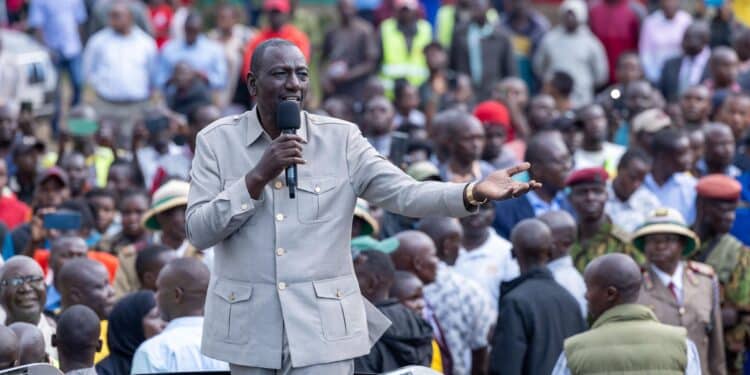
Others, however, point to President Ruto’s own political style as part of the challenge. Since becoming President, Ruto has cultivated an image of accessibility by frequently walking into crowds, shaking hands freely, and minimizing visible barriers between himself and ordinary citizens. Supporters see this as a sign of humility and confidence, while security experts warn that such openness increases vulnerability and reduces response time in the event of a genuine threat.
Political leaders have also weighed in on the matter. Belgut MP Nelson Koech defended the reshuffle, arguing that officers responsible for presidential security should treat their duties with the highest level of seriousness. He described the shake-up as a warning to security personnel against complacency.
The changes now signal growing pressure on Kenya’s security agencies to strengthen presidential protection protocols amid rising political tensions and heightened public scrutiny. Security experts note that any lapse involving the Head of State carries major national security implications and can damage public confidence in state institutions.
For many Kenyans, the Kilifi breach became more than just an isolated incident. It evolved into a wider conversation about leadership visibility, political symbolism, and whether modern populist politics is beginning to conflict with traditional presidential security standards.
As investigations continue into how the breach occurred, the removal of Noah Maiyo now stands as one of the clearest signs yet that the government considers the Kilifi incident a serious failure that could not be ignored.