MPs Clash Over Finance Bill 2026 in Heated Parliamentary Showdown

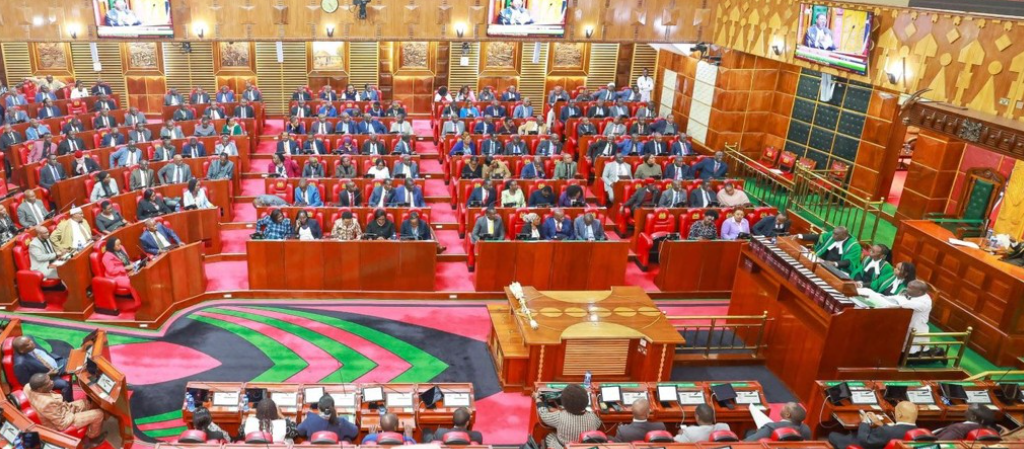
The National Assembly witnessed dramatic scenes as debate on the Finance Bill 2026 kicked off, with lawmakers engaging in heated exchanges over the government’s proposed tax measures contained in last week’s national budget.
What began as a routine legislative debate quickly escalated into a tense political confrontation, forcing the presiding Speaker, Farah Maalim, to repeatedly intervene as Members of Parliament shouted over one another in a chamber marked by accusations, counter-accusations, and procedural disputes.
At several points, the debate threatened to descend into complete disorder as MPs from both the government and opposition sides clashed over the impact of the proposed tax measures on ordinary Kenyans and businesses.
The opposition led the charge against the Finance Bill, arguing that many of the proposals would further burden citizens already struggling with the high cost of living. Lawmakers questioned whether the annual finance bills passed by Parliament were delivering meaningful economic benefits or simply creating uncertainty for businesses and investors.
One opposition legislator argued that low-income earners deserved immediate relief from mounting financial pressures.
“Kenyans earning below KSh30,000 deserve a reprieve, especially in a situation where their pockets are raided from every direction,” an MP said during the debate.
The confrontation intensified after Deputy Minority Leader Robert Mbui launched a strong attack on the bill, dismissing government claims that it is designed to protect vulnerable citizens. Mbui challenged several provisions contained in the legislation and accused the administration of failing to adequately address the economic struggles facing millions of households.
His remarks drew an immediate response from Majority Leader Kimani Ichung’wah, who accused the opposition of misleading the public on the contents of the Finance Bill.
Ichung’wah specifically pushed back against claims regarding a proposed levy on mitumba imports, insisting that the controversial proposal had already been dropped and should not be used to create unnecessary public anxiety.
The majority leader further accused some opposition MPs of inconsistencies in their positions, pointing to previous parliamentary votes on earlier finance bills as evidence of shifting political positions.
As tempers continued to rise, Speaker Farah Maalim was forced to repeatedly call members to order, at times standing to restore calm as lawmakers ignored instructions and engaged in shouting matches across the floor of the House.
The chairman of the Budget and Appropriations Committee, Kimani Kuria, also found himself at the center of the storm after defending the committee’s handling of the bill. Kuria rejected accusations that the committee had ignored concerns raised by members and reminded MPs that they still had the opportunity to formally propose amendments during the legislative process.
“The House will have an opportunity to debate amendments. If members believe they have better proposals, they should table them and convince the House,” Kuria argued.
Among the most contentious issues debated were proposals relating to non-residential rental income tax, which is proposed to be capped at 30 percent. Opposition MPs argued that the measure could negatively affect investors and property owners, while government legislators maintained that the proposal was not introducing a new tax burden.
Other provisions that generated intense discussion included taxation on betting and gaming activities, dividend taxation, and changes affecting products that were previously zero-rated but are now classified as tax-exempt under the proposed legislation.
The Finance Bill 2026 is expected to remain one of the most fiercely contested pieces of legislation this year as both sides of the political divide seek to shape the country’s tax policy amid growing public concern over the cost of living.
The debate also comes at a politically sensitive time, with opposition leaders mobilizing against some of the government’s economic policies and calling for greater public scrutiny of taxation measures.
As Parliament prepares for the next stages of consideration, lawmakers are expected to introduce further amendments while lobby groups, businesses, and ordinary Kenyans continue to closely monitor proposals that could have a significant impact on household incomes and economic activity.
With strong opinions emerging from both sides of the aisle, the Finance Bill 2026 is shaping up to be one of the most closely watched parliamentary battles in recent years.