Report Reveals Government Spent Sh22 Billion on Travel and Hospitality in Nine Months


Fresh questions have emerged over the government’s commitment to austerity measures after a new report revealed that more than KSh22 billion was spent on travel and hospitality by national government institutions within just nine months.
The findings, contained in a report by Controller of Budget Margaret Nyakang’o, show that despite repeated calls for prudent spending and budget cuts, expenditure on some of the very areas targeted for reduction continues to rise. The report covers the period between July 2025 and March 2026 and paints a picture of a government still spending heavily on travel and official hospitality.
According to the report, the national government spent a total of KSh3.4 trillion during the nine-month period under review. Of this amount, approximately KSh2.9 trillion went towards recurrent expenditure, while KSh507.9 billion was allocated to development projects.
One of the most notable revelations is the amount spent on travel. Government ministries, departments, agencies, Parliament, and other institutions collectively spent KSh17.3 billion on both domestic and foreign travel. The expenditure comes at a time when many Kenyans are facing economic pressures linked to the high cost of living, taxation, and rising fuel prices.
The report identifies several institutions as major spenders on travel. The Ministry of Foreign and Diaspora Affairs emerged as the biggest spender on foreign travel, followed closely by State House. State House alone spent approximately KSh1.3 billion on foreign travel during the period under review, in addition to KSh69 million spent on domestic travel.
The Office of the Deputy President also recorded significant travel expenditure, spending KSh76 million on foreign trips and KSh222 million on domestic travel over the same period.
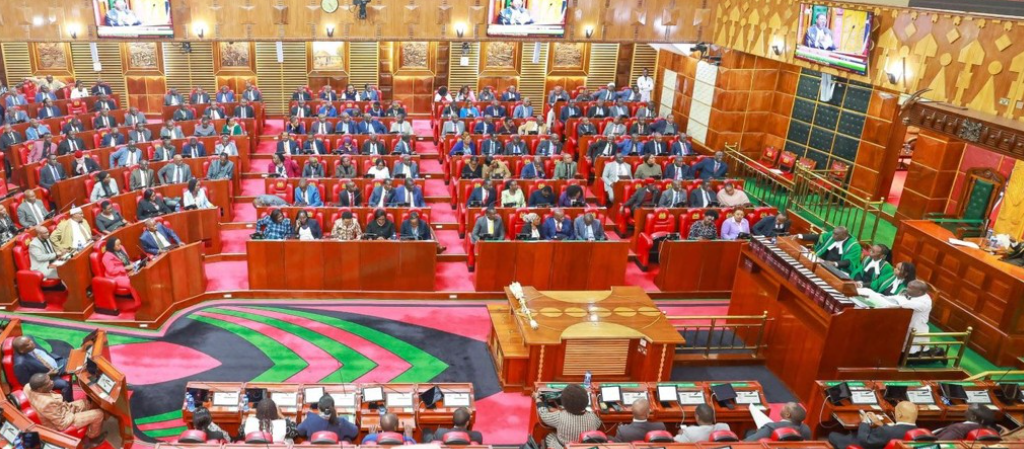
Parliament similarly accounted for a substantial share of travel-related costs. Members of the National Assembly spent approximately KSh2.8 billion on domestic travel, while senators spent about KSh1 billion on local travel and a further KSh815 million on foreign travel.
Beyond travel, the report highlights a sharp increase in hospitality expenditure across government institutions. National government entities, including Parliament and the Judiciary, spent a combined KSh4.9 billion on hospitality expenses. This represents a 33 percent increase compared to the KSh3.7 billion spent during the same period in the previous financial year.
Parliament alone accounted for KSh283 million in hospitality spending, while State House, the Office of the Deputy President, and the Executive Office of the President collectively spent KSh703 million on hospitality and related functions.
The figures are likely to fuel debate over government spending priorities, particularly as officials continue to urge Kenyans to embrace fiscal discipline and as the country grapples with budget deficits, rising public debt obligations, and demands for increased funding in critical sectors such as health, education, and agriculture.
Critics argue that the expenditure undermines the government’s message on austerity and raises concerns about whether enough is being done to reduce non-essential spending. Supporters of the government, however, maintain that some travel and hospitality expenses are necessary for diplomacy, governance, oversight, and the day-to-day functioning of public institutions.
The report comes at a politically sensitive time, with debate intensifying around public expenditure, taxation, and the proposed national budget. Opposition leaders have frequently accused the government of failing to lead by example when it comes to cutting costs, while government officials insist that reforms are underway to improve efficiency and accountability.
As Kenyans continue to scrutinize public spending, the latest findings are expected to renew calls for greater transparency and stricter controls on government expenditure. The figures are also likely to feature prominently in ongoing discussions about how best to balance fiscal responsibility with the operational needs of state institutions.
With pressure mounting on public institutions to demonstrate value for money, the report has once again placed government spending habits under the spotlight and reignited the national conversation on accountability, austerity, and prudent management of taxpayer resources.