Uganda Mourns Former Deputy Prime Minister Moses Ali

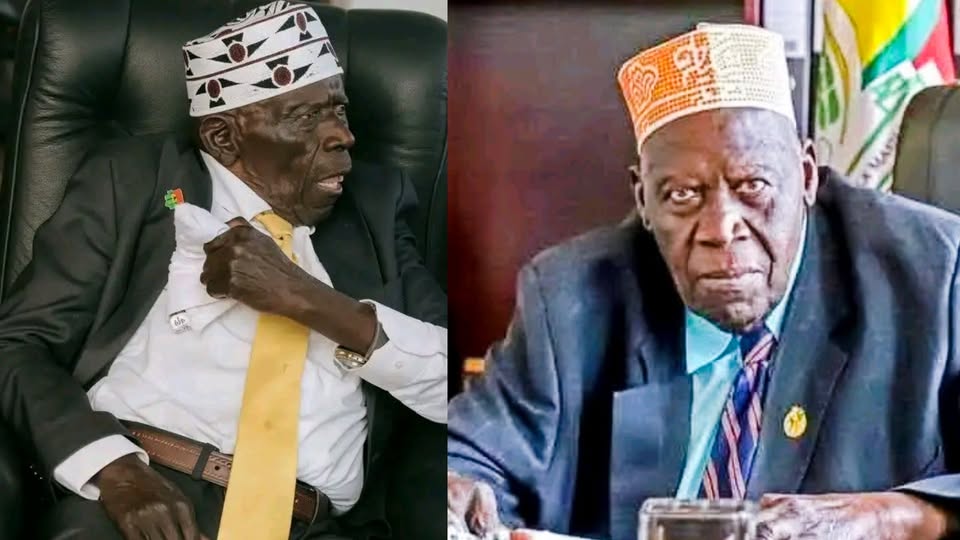
Uganda is mourning the death of veteran politician and former Second Deputy Prime Minister Gen. (Rtd) Moses Ali, who passed away on Saturday, July 18, 2026, at the age of 87.
Ali, who served as the Member of Parliament for Adjumani West County, died at Nakasero Hospital in Kampala after being admitted in critical condition. He had earlier undergone treatment at the Mulago Heart Institute before his condition deteriorated, prompting his transfer to Nakasero Hospital.
His death was confirmed by Deputy Speaker of Parliament Thomas Tayebwa, who described the veteran statesman as a mentor, father figure, and one of Uganda’s most dedicated public servants.
“I’m deeply saddened by the passing of Rt. Hon. Gen. (Rtd) Moses Ali, Member of Parliament for Adjumani West County. Uganda has lost a true giant whose legacy of selfless service, discipline, and unwavering commitment to the nation will endure for generations,” Tayebwa said.
Reflecting on their working relationship, Tayebwa recalled serving alongside Ali when he was Government Chief Whip during Ali’s tenure as Deputy Prime Minister and Deputy Leader of Government Business.
“His guidance and wisdom helped me settle in and grow into my role until my election as Deputy Speaker. Our offices were opposite each other and his door was always open for me to consult and tap into his unmatched wisdom,” he added.
President Yoweri Museveni also paid tribute to the late leader, describing him as a patriotic Ugandan whose contribution to both the military and public service spanned several decades.
“It is with deep sorrow that I announce the death of our brother Gen. Moses Ali. He died today at Nakasero Hospital, at 1600 hours,” Museveni posted on X.
The President praised Ali’s distinguished service as both a soldier and political leader, while also recognizing his contribution to agricultural development in the West Nile region.
“We shall miss greatly his contribution. May the Almighty God rest his soul in eternal peace,” Museveni said.
Born on April 5, 1939, in Adjumani District, Moses Ali joined the Uganda Army in 1968, rising through the ranks to become one of the country’s most influential military officers.
During the administration of former President Idi Amin, Ali held several senior government positions, including Minister of Finance. Following the collapse of Amin’s government in 1979, he formed and led the Uganda National Rescue Front (UNRF), an armed movement based in the West Nile region.
In 1986, Ali signed a peace agreement with President Museveni’s National Resistance Movement government. The agreement led to the integration of his fighters into the national army and marked his return to mainstream politics and government service.
Over the following decades, Ali occupied numerous senior positions in government, serving as Minister of Tourism, Wildlife and Antiquities, Minister of Internal Affairs, and Minister of Disaster Preparedness. He also held the offices of Third Deputy Prime Minister, First Deputy Prime Minister, and Second Deputy Prime Minister, while serving as Deputy Leader of Government Business in Parliament.
In Uganda’s 2026 General Election, Ali was re-elected as the Member of Parliament for Adjumani West County, becoming the oldest legislator in the country’s 12th Parliament at the age of 87.
Shortly after the election, President Museveni left him out of the new Cabinet, citing health concerns, and appointed his son, Siraj Musa Ali, as State Minister for Transport.
Widely known in the West Nile region as the “Lion of Adjumani” and the “Cock of Madi,” Moses Ali remained an influential political figure throughout his career. Beyond politics, he championed agricultural development and supported government programmes aimed at improving livelihoods across northern Uganda.
Following news of his death, tributes continued to pour in from political leaders, Members of Parliament, government officials, and ordinary Ugandans, many remembering him as one of the country’s longest-serving leaders whose military, political, and public service legacy shaped Uganda’s modern history.