
The Starlink Slowdown: Why Kenya’s Internet Disrupter Is Losing Altitude

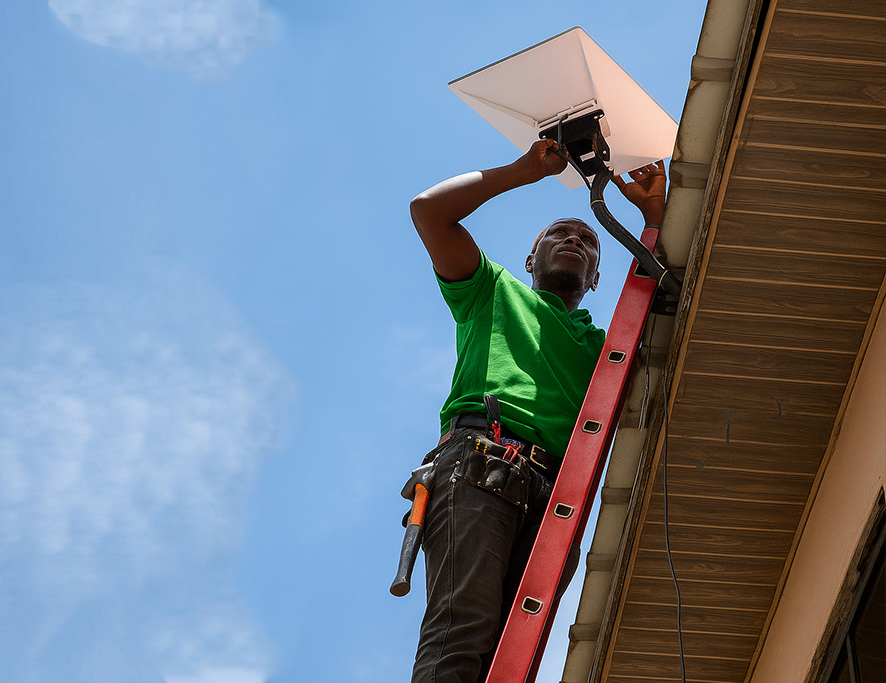
Starlink, the Low Earth Orbit (LEO) satellite service from SpaceX, initially entered the Kenyan market as a genuine disruptor, offering unprecedented high-speed internet in previously underserved and remote regions. However, less than two years after its launch, the service is facing a substantial subscriber decline—losing over 10% of its user base in the first quarter of 2025—as it struggles to compete in the country’s high-growth, price-sensitive urban centers. The primary factors driving this contraction are a critical mismatch between cost and performance in urban environments, the aggressive counter-measures from established local ISPs, and inherent operational limitations.
In a market dominated by affordable mobile and fiber options, Starlink’s pricing presents an insurmountable barrier for the average urban consumer. The service requires a significant upfront hardware cost (around KES 27,000 for the kit), followed by monthly subscription fees (KES 4,000 to KES 6,500) that are typically three to four times higher than comparable fiber-to-the-home plans offered by giants like Safaricom, Zuku, and Jamii Telecommunications. While Starlink provides unique access in remote areas, for urban users who have multiple fiber options, paying a premium for satellite technology that delivers a median speed of around 47 Mbps—often slower than the advertised 50 Mbps or 100 Mbps fiber packages—is simply not justifiable.
Starlink’s rapid initial growth, spurred partly by its ability to bypass local network disruptions during periods of political instability, quickly led to network capacity overload in high-demand areas, particularly Nairobi and its metropolitan counties. This congestion forced Starlink to temporarily freeze new urban subscriptions for several months and resulted in a noticeable decline in service quality, frustrating existing users with slower, inconsistent speeds. This service degradation, coupled with the lack of local, on-site customer support and the mandatory reliance on online troubleshooting, pushed many subscribers to revert to local providers who offer reliable customer care and physical service centers.
The established local players have not been passive. In direct response to Starlink’s entry, competitors aggressively launched price wars and speed upgrades. Safaricom, the market leader, not only slashed the price of its 5G routers to be drastically cheaper than Starlink’s dish but also significantly boosted speeds across its fibre-optic tiers at no extra cost. This strategy directly addresses Starlink’s main competitive threat, making the fiber offering an overwhelmingly superior choice on both price and speed in all areas where it is available. Furthermore, proposed regulatory changes in Kenya, which seek to dramatically increase licensing fees and impose turnover levies on satellite operators, signal a tougher operating environment that will further strain Starlink’s operational costs and ability to compete on price.
While Starlink remains a critical utility for deep rural areas, tourism regions, and remote businesses where terrestrial infrastructure is non-existent, its once-thriving urban subscriber base is migrating back to faster, cheaper, and more robust fiber-to-the-home (FTTH) networks.


