Political Masterclass or Public Misuse? The Controversy Behind the Massive State House Aspirants Forum

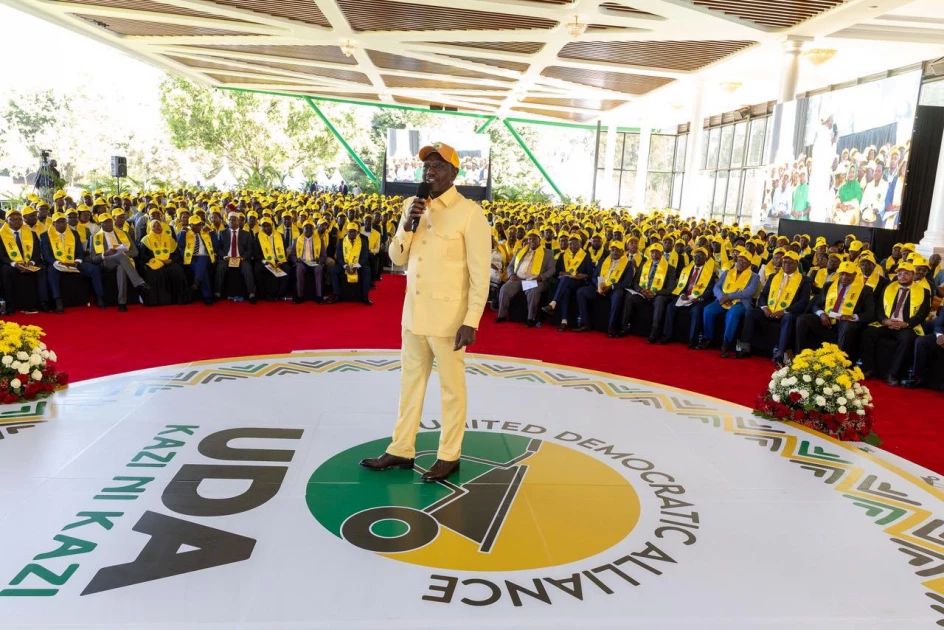
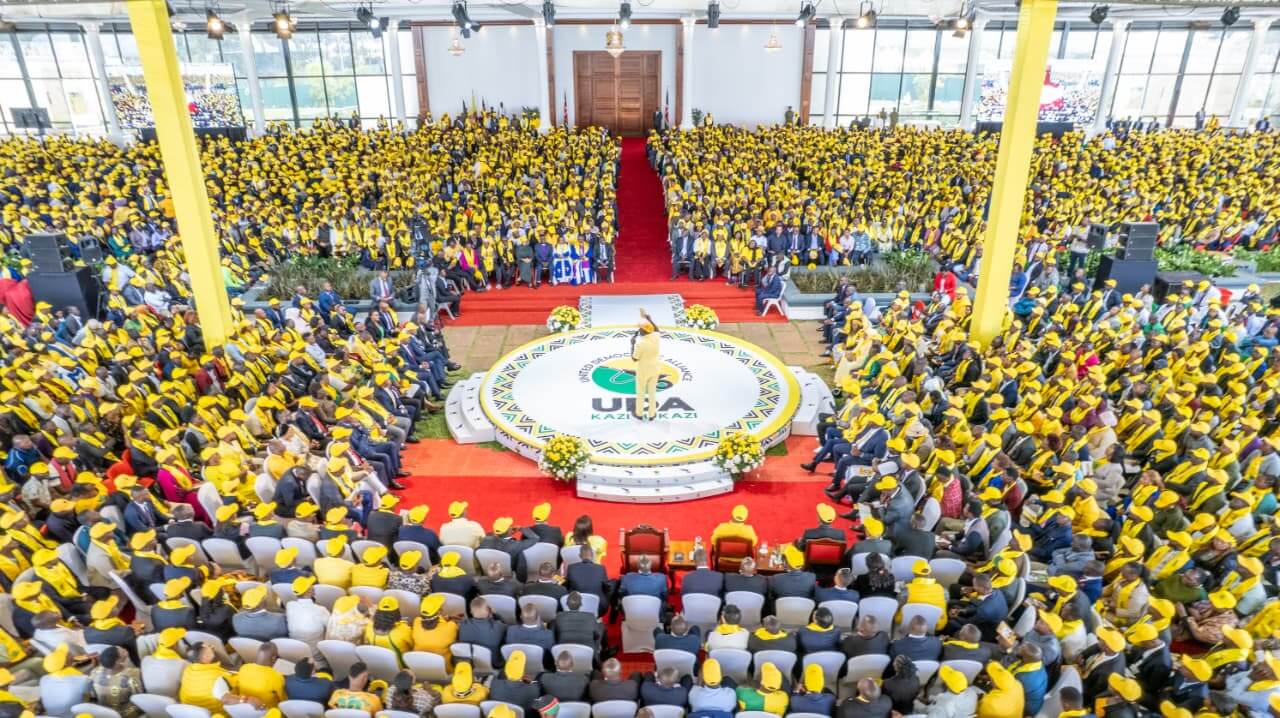
On Wednesday, February 4, 2026, the grounds of State House Nairobi were transformed into a sea of yellow as President William Ruto hosted a staggering 12,353 aspirants. From gubernatorial hopefuls to ward representative (MCA) contenders, the sheer volume of candidates—many who trekked hundreds of kilometers or cycled from as far as Baringo—signaled that the UDA “Yellow Wave” is far from receding.
Nairobi alone produced nearly 1,000 hopefuls, but it was the strong presence from the Rift Valley and Mt. Kenya regions that solidified the party’s grip on its traditional strongholds. Supporters described the atmosphere as “unstoppable momentum,” a strategic display of dominance designed to send a clear message to any 2027 challengers: the incumbent’s party is packed, funded, and ready for battle.
Taking the podium alongside Deputy President Kithure Kindiki and Prime Cabinet Secretary Musalia Mudavadi, President Ruto struck a populist chord. He touted his administration’s 80% delivery rate on manifesto promises, specifically highlighting the recent PAYE tax exemptions for low-income earners as proof that the “Hustler” agenda is working.
Aware of the internal friction that often tears dominant parties apart, Ruto made a solemn vow to the thousands of nervous candidates:
“The party nomination primaries will be free, fair, credible, and just. There will be no favoritism, no ‘favored’ candidates, and no backroom deals.”
This “no-favoritism” pledge is a high-stakes gamble. With over 10,000 people fighting for just 1,450 MCA slots, the UDA primaries are set to be some of the most competitive—and potentially volatile—internal contests in Kenyan history.
While the mood inside State House was one of jubilation, the event was not without its “political heat.” Leaders like DP Kindiki and Musalia Mudavadi called for “peaceful and mature” campaigns, urging aspirants to popularize government programs rather than engaging in mudslinging.
However, the choice of venue sparked a fierce backlash from the opposition. Vocal MPs like Peter Salasya and Caleb Amisi took to social media to decry what they called the “partisan use of public grounds.” Critics argued that hosting a purely party-driven political forum at State House—a symbol of national unity—crosses a line. “State House belongs to all Kenyans, not just the UDA elite,” one critic noted, setting the stage for a heated debate on the boundaries of incumbency.
Political analysts suggest that by engaging these 12,353 aspirants directly, Ruto is building an “Aspirant Army.” These individuals are now incentivized to hit the grassroots, mobilize voters, and defend the government’s record in every village and ward to secure their own political futures.
With over Ksh 31 million already raised in registration fees from this single forum, the UDA war chest is bulging, and the road to 2027 officially looks like a high-speed chase.