Collaboration or Takeover? Sakaja Defends Territory as Ruto Steps in to Clear the Trash

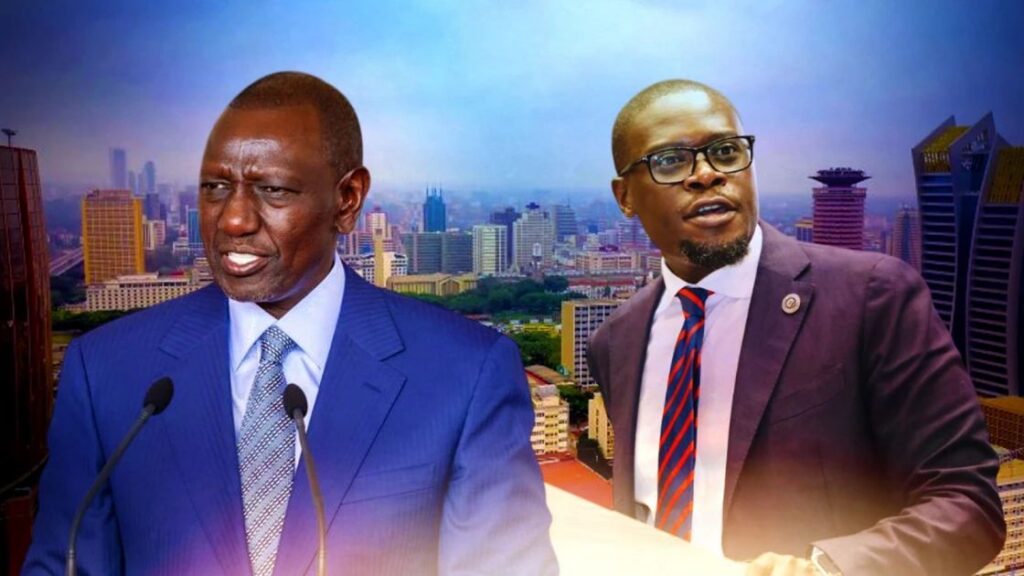
Nairobi is bracing for a massive infrastructure facelift following a high-level partnership between President William Ruto and Governor Johnson Sakaja. Announced on Tuesday, February 10, 2026, the deal aims to tackle the “Big Three” headaches of the capital: garbage, water, and roads. Backed by the national government’s KSh 4.7 trillion budget policy, the partnership promises a multi-agency sweep to restore the “Green City in the Sun.” Central to this is the launch of organized garbage collection starting April 1, 2026, and a plan to finally decommission the infamous Dandora dumpsite in favor of a modern waste-to-energy plant in Ruai.
For residents of Eastlands, Lang’ata, and Utawala who have survived on “water cartels” for years, relief is finally flowing. The President confirmed that the Northern Collector Tunnel—a KSh 8 billion engineering marvel—is now injecting an additional 140 million liters of water daily into the city’s parched pipes. This boost is intended to bridge the massive gap between Nairobi’s demand of 900 million liters and its previous supply of barely 525 million. Sakaja noted that while the water is now in the system, the focus shifts to “last-mile” connectivity to ensure taps in Karen and beyond don’t stay dry.
Despite the celebratory tone, the partnership has touched a political nerve. Critics, led by Nairobi Senator Edwin Sifuna, have raised constitutional red flags, questioning whether this is a “soft takeover” of county powers reminiscent of the defunct Nairobi Metropolitan Services (NMS). Sifuna challenged the legality of the move, arguing that any transfer of functions requires a formal Deed of Transfer and approval from the County Assembly. Sakaja, however, has been firm: “There are no functions ceded.” He maintains the deal is a “collaboration under the Urban Areas and Cities Act,” not a surrender of his mandate.
The timing of this partnership isn’t lost on political observers. With Jalang’o recently declaring his bid for Sifuna’s Senate seat and internal ODM-UDA tensions simmering, the “City Fix” is as much about 2027 politics as it is about service delivery. If the streets are cleaner and the water flows by the end of 2026, Sakaja—who has faced criticism over “declining standards”—could see his approval ratings rebound. However, if the national government’s involvement leads to the same “pending bills” and “overlapping mandates” that plagued the NMS era, the Governor may find himself defending more than just his garbage collection record.