
The Teachers’ Wrath: Outrage as Treasury CS Claims Low-Earners are “Excited” by Tax Relief

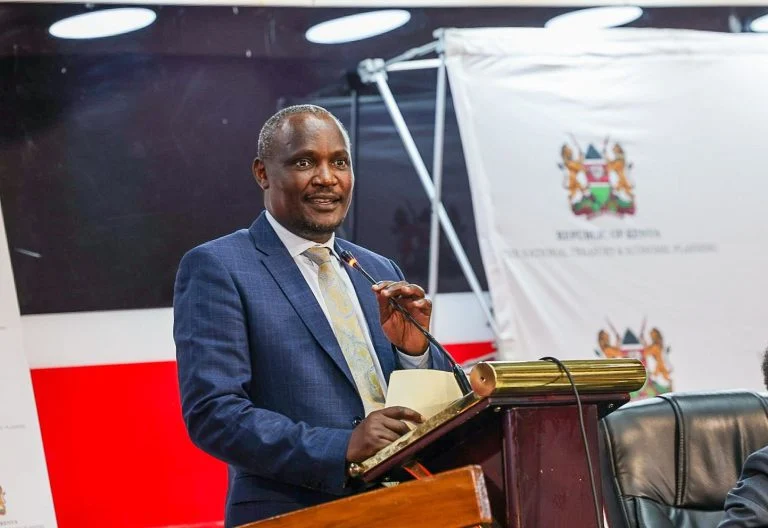
Treasury Cabinet Secretary John Mbadi has hit the airwaves with a bold claim: the “little guy” is finally winning. Speaking at the Nairobi Securities Exchange (NSE) on February 10, 2026, Mbadi defended the government’s move to raise the tax-free threshold from Ksh 24,000 to Ksh 30,000. According to the CS, this effectively hands a monthly “bonus” of Ksh 1,500 to Ksh 2,000 to the nation’s backbone—primary school teachers and police constables. For those earning between Ksh 30,000 and Ksh 50,000, a further 5% cut (down to 25%) aims to cushion the lower middle class against a shrinking economy.
To back his narrative of a booming economy, Mbadi pointed to the Nairobi Securities Exchange, which has surged from a valuation of Ksh 1.2 trillion in 2022 to over Ksh 3.2 trillion in early 2026. While the “paper wealth” of the country is at an all-time high—led by giants like Safaricom and the banking sector—critics argue that stock market charts don’t put ugali on the table. The CS maintains that “money in the pockets of the poor” will drive the velocity of money, but for the average Kenyan, the gap between the KSh 3 trillion market cap and their empty wallets remains a gaping canyon.
The response from the “ground” has been anything but “excited.” Online, the hashtag #MbadiMath trended as Kenyans mocked the idea that Ksh 1,500 constitutes a life-changing windfall. Critics were quick to point out that even with the relief, a teacher earning Ksh 30,000 is still struggling to survive in a city where the cost of living has outpaced incremental tax gains. “When did Mbadi become the spokesperson for the police?” one viral post asked, while others labeled the gloating as “shameless,” noting that in neighboring economies, those in uniform and in classrooms earn significantly more than the current Kenyan “reprieve.”
Despite the backlash, government supporters have rallied behind the numbers. They point to the aggressive hiring of over 56,000 teachers in less than four years—a feat they claim dwarfs previous administrations. Supporters argue that while the relief is incremental, it is a “rare win” in a fiscal landscape usually defined by new levies. For the 1.5 million Kenyans who will now pay zero PAYE, the government insists this is a tangible “Bottom-Up” victory, even as the debate over what constitutes a “livable wage” continues to haunt the 2027 political horizon.