Fuel Prices Hit Historic 200-Shilling Mark: Ruto’s Past Promises Face the Ultimate Reality Check

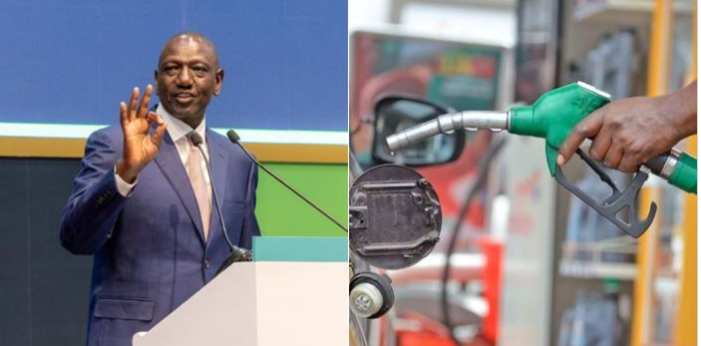
For the first time in Kenyan history, the cost of fuel has shattered the 200-shilling-per-liter barrier, marking a definitive turning point in the nation’s economic landscape. In its latest April 2026 review, the Energy and Petroleum Regulatory Authority (EPRA) announced a massive surge: super petrol rose by Sh28.69 and diesel by a staggering Sh40.30, bringing both to retail at Sh206.97 and Sh206.84 respectively in Nairobi. This “steepest single-cycle hike in years” has sent shockwaves through the economy, prompting the Matatu Owners Association to immediately announce a 25% increase in bus fares, while the cost of basic commodities is expected to follow suit.
While the government was quick to act with a series of late-night “cushioning” measures—including a Sh6.5 billion subsidy allocation and a last-minute Value Added Tax (VAT) reduction from 16% to 8%—the intervention has not been enough to silence the growing political and public outcry. The focus has shifted from the numbers at the pump to the words once spoken on the campaign trail.
President William Ruto, who built his “Hustler” platform partly on the promise of lowering the cost of living and dismantling “fuel cartels,” is now facing intense scrutiny over his previous assertions. During the 2022 campaign and the Russia-Ukraine war, Ruto famously dismissed global supply chain excuses as “escapist” and questioned why landlocked Uganda could enjoy cheaper fuel despite its supplies transiting through Kenya. Today, that paradox has returned: as of April 15, 2026, petrol in Uganda retails at approximately Sh188.67—nearly Sh18 cheaper than in Kenya.
Critics are pointing to the President’s own words from the 2022 presidential debate, where he noted that 50% of the cost of fuel is taxes and pledged to interrogate the 15 different levies inflating prices. Despite the recent VAT cut to 8%, taxes still account for roughly 36% to 45% of the pump price, with petrol alone carrying an Sh82.09 per liter tax burden. Prominent voices, including Kiharu MP Ndindi Nyoro, have openly questioned the viability of the Government-to-Government (G-to-G) fuel import deal, suggesting it has failed to deliver the promised competitive edge for Kenyan consumers.
In a direct response to the criticism, President Ruto has defended his administration’s strategy, arguing that the priority has been ensuring a steady supply in a volatile global market. “There are countries that do not have fuel, but in Kenya, we have enough,” he noted during a recent tour in Kisii County. The administration maintains that the U.S.-Israel-Iran conflict and the resulting blockade of the Strait of Hormuz have created an “unprecedented” global shock that would have been far worse without current state interventions.
However, for the average Kenyan—the boda boda rider in Narok or the commuter in Machakos—the nuance of global maritime blockades is overshadowed by the brutal arithmetic of the pump. As the country navigates this new high-cost era, the challenge for the administration remains one of consistency: reconciling the crusader-like rhetoric of the past with the hard, inflationary realities of 2026 governance.