Anglican Bishop Alleges ‘Repressive’ Ruto Regime Favors Mount Kenya, Blasts Luo CSs as Useless ‘Choir’ (WATCH)

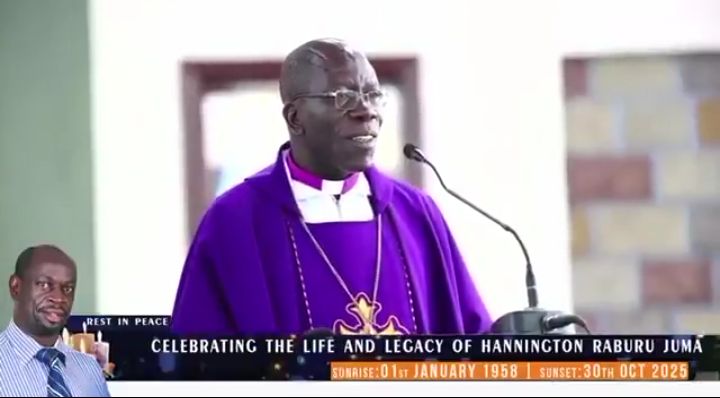
The funeral service for engineer Hannington Raburu Juma at ACK St. Stephen’s Cathedral in Kisumu on November 12, 2025, turned into an extraordinary political platform. Anglican Bishop Rt. Rev. Charles Ong’injo of the Maseno South Diocese delivered a blistering sermon that went far beyond a eulogy, directly challenging President William Ruto’s administration and the regional leaders serving in it.
Bishop Ong’injo did not mince words, launching a direct attack on the governance record of the current administration. He condemned the regime as one of the most repressive in Kenya’s history, making the shocking declaration:
“I don’t think there is any government that has killed its people more than the Ruto government in the history of Kenya… People are being abducted and silenced; lives are being lost, yet the leadership continues to lie to us with empty promises.”
The Bishop further lambasted the pervasive high cost of living and state initiatives, which he dismissed as “hollow gestures” and “performative charity” amid widespread corruption and failure to pay workers. He also openly questioned the fairness of past elections, tapping into deep-seated public anxieties about state impunity and political accountability.
The most controversial part of the Bishop’s critique targeted the issue of ethnic representation, specifically within the Cabinet. Ong’injo accused the administration of ethnic favoritism toward Mount Kenya leaders, contrasting their at least seven Cabinet slots with the mere two held by leaders from the Luo community.
He reserved his harshest criticism for the Luo Cabinet Secretaries appointed to government, dismissing their claims of regional inclusion and representation:
“Those Luo CSs are just loud. They are like a ‘choir and a chorus’—singing what they are told to sing. If you are in government, show it through service, not noise.”
The Bishop’s words shattered the political comfort zone of leaders who have publicly championed the government, arguing that their presence symbolizes inclusivity. Ong’injo insisted that symbolic appointments cannot mask the persistent economic suffering and repression faced by ordinary citizens in the region.
The fiery sermon immediately ignited a national debate. While the Bishop’s stance drew high praise from opposition figures and citizens on social media—some even labeling him the “new Bishop Okullu”—it elicited immediate backlash from pro-Ruto groups who accused the church of being dragged into partisan politics. The event amplifies the growing tension between the church’s traditional role as a moral conscience and the political establishment, reigniting calls for greater government accountability and genuine, equitable development.